Print vs Jacquard: Which Lasts, Which Costs More
By Lanqing Gao, Production Manager at Bentepromo — Dalang, China
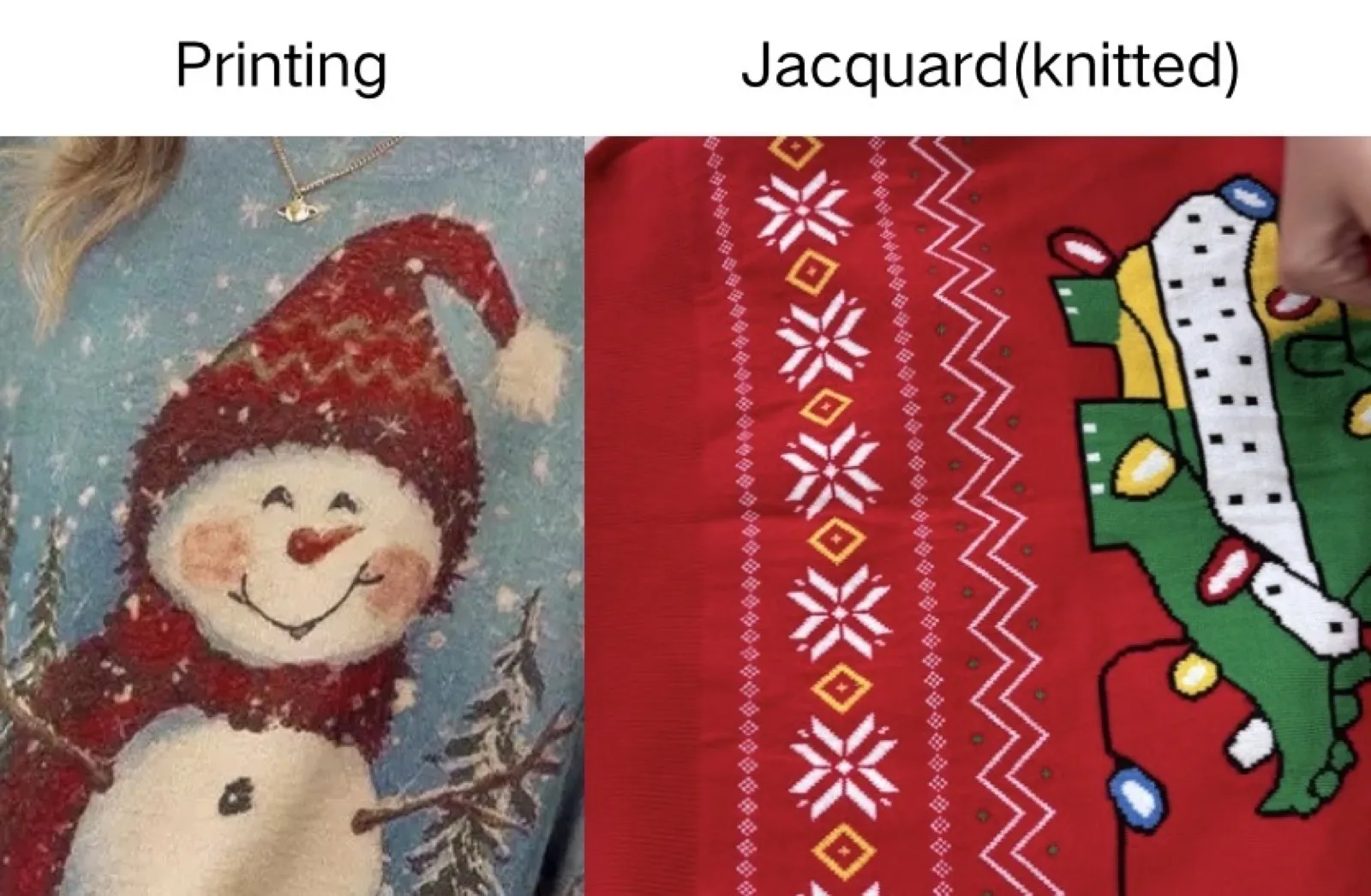
Here is the difference in one line: print sits on top of the yarn; jacquard is woven into the fabric. Everything else — how the garment looks, feels, ages, and costs — follows from that single distinction.
For custom sweaters and knitwear, this is the decision that shapes the finished product more than any other. Get it right and the garment matches the price your customer expects to pay. Get it wrong and you either overpay for a finish nobody asked for, or ship something that looks cheap and cracks after a few washes.
The fundamental difference: surface vs structure
Printing
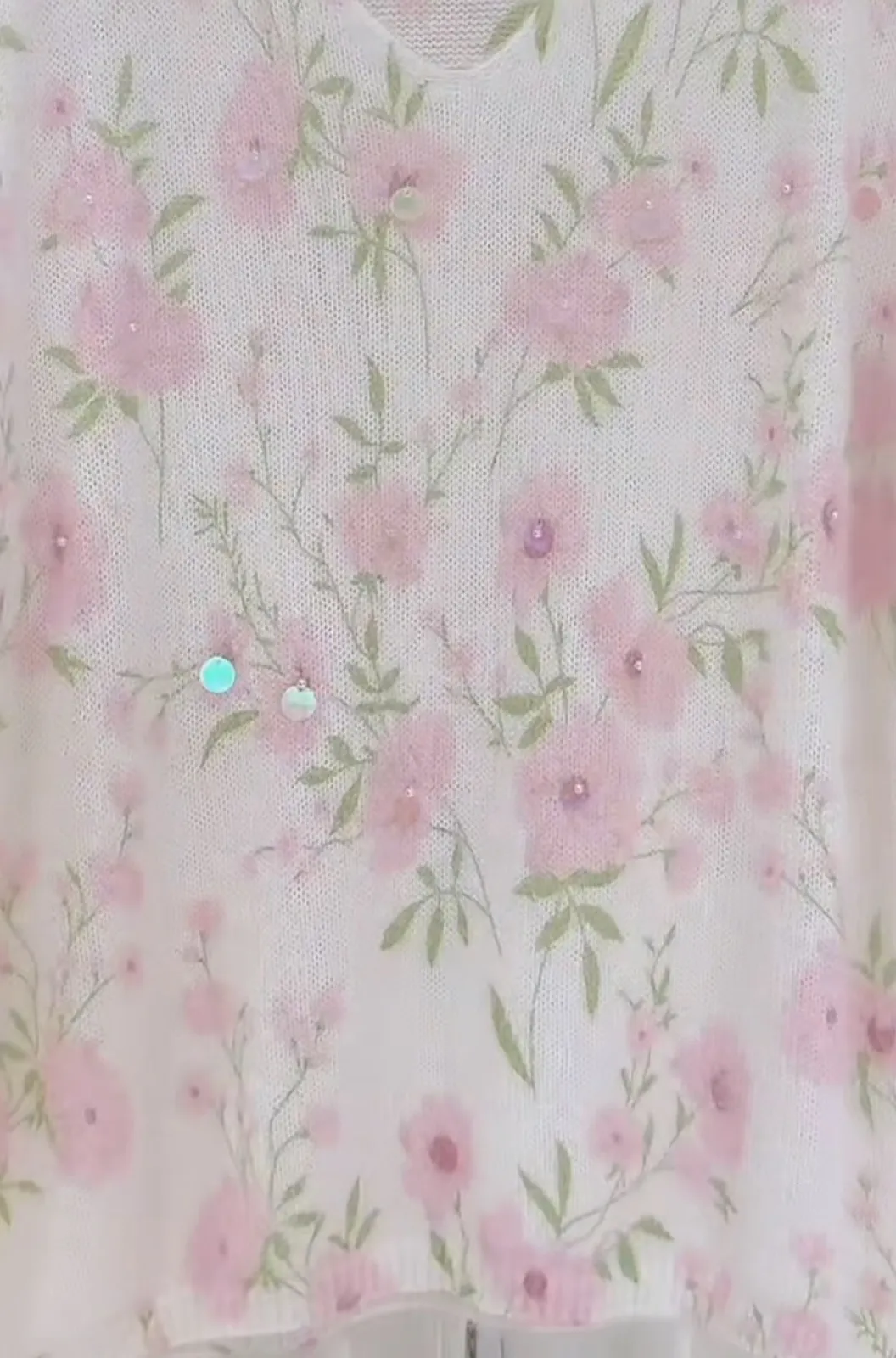
Printing applies dye or pigment to the surface of a fabric that has already been knitted. On cotton-based knitwear, pigment printing is the workhorse:
- Pigment printing — the color coats the surface instead of penetrating it. Cheaper and faster, but less durable.
Two application processes are also common on sweaters:
- Heat-transfer printing — the design is printed onto a carrier paper or film, then heat-pressed onto the garment. Ideal for small logos and lettering; with pigment inks it sits on the surface and can crack with washing.
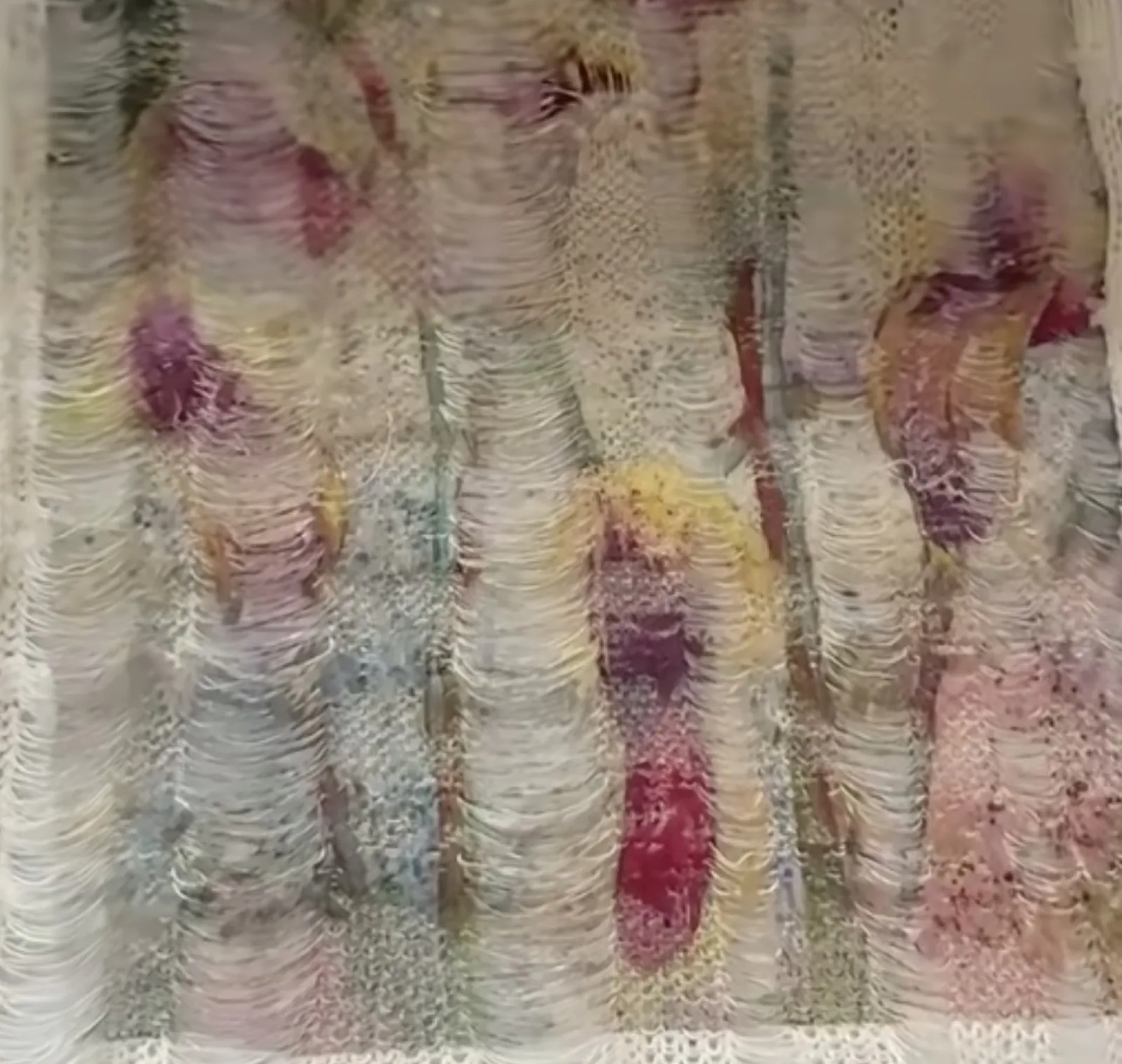
- Digital printing — the design is ink-jetted directly onto the fabric. Great for photographic or small-run designs, but on knit surfaces it can read stiff and is less durable than a knitted-in pattern.
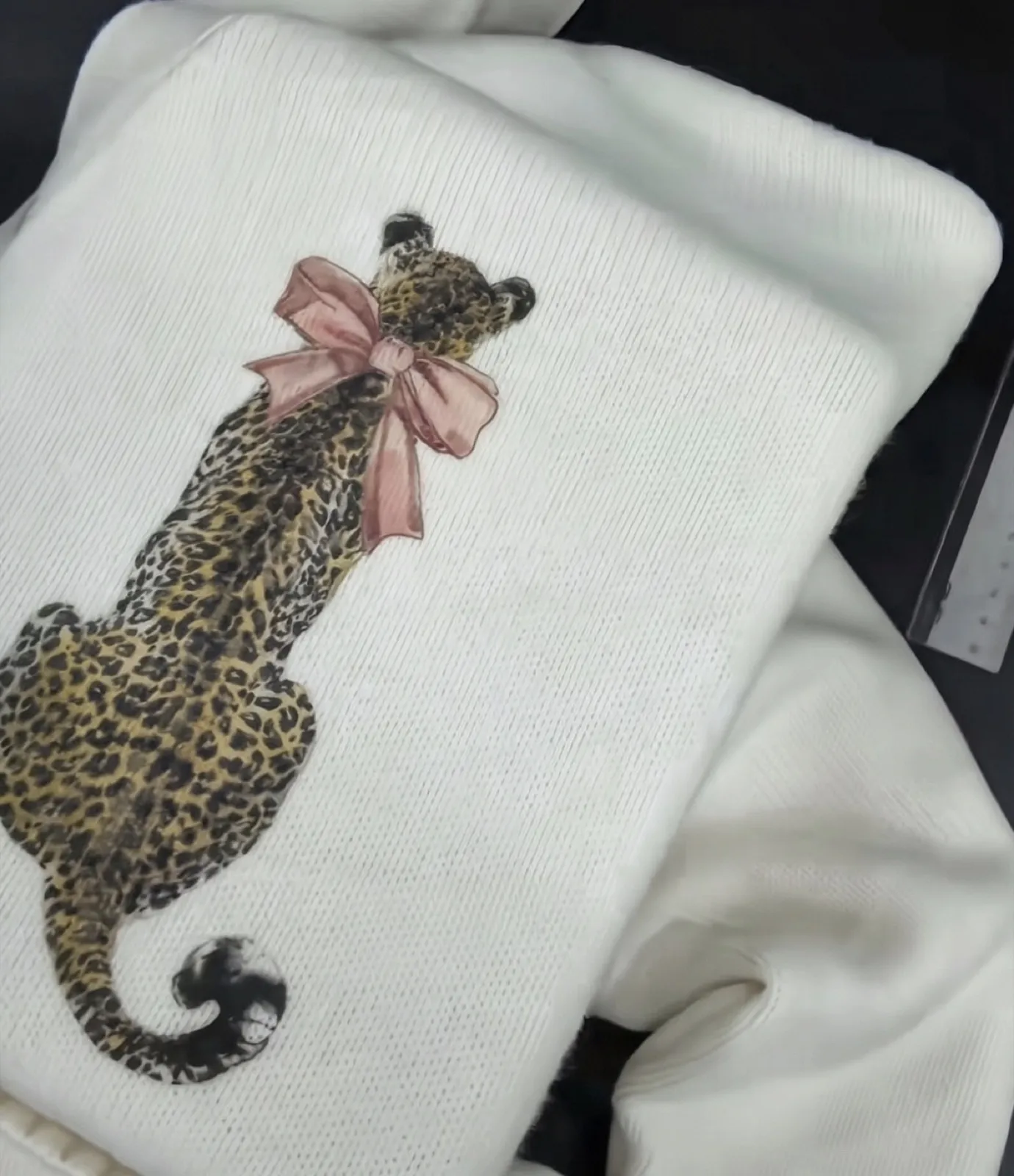
Either way, the result is flat: no texture, no depth. Printing's big advantage is color. It handles photographic gradients, fine text, and designs with six or more colors that would be impossible to knit. It's fast and inexpensive.
The trade-off is durability. A printed pattern can crack, fade, or peel with washing, and up close it reads thin. For a one-off giveaway on a tight budget, that's often acceptable. For a premium, "heirloom" sweater, it isn't.
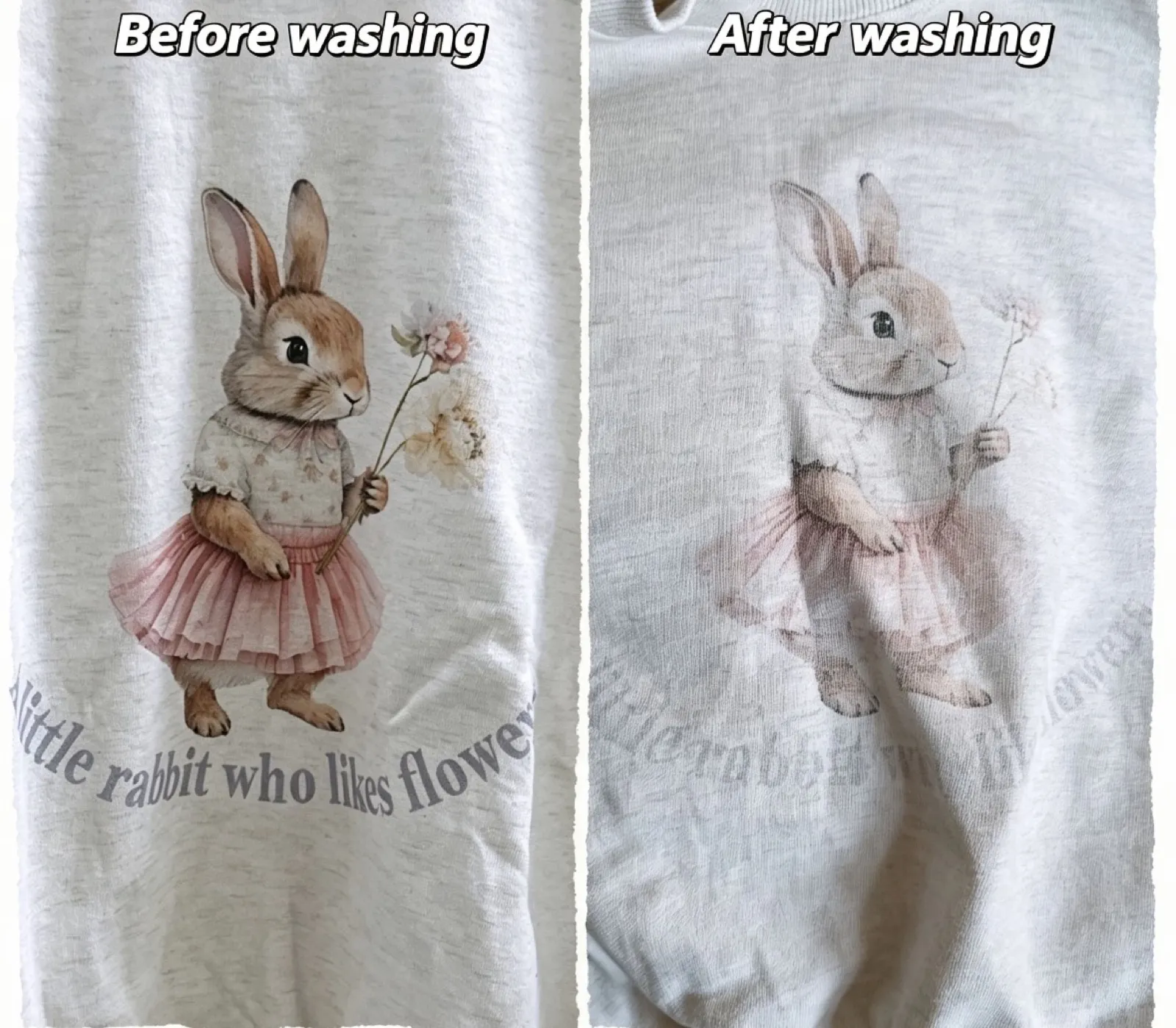
Jacquard knit
Jacquard forms the pattern during the knitting process, by interweaving different-colored yarns. The pattern isn't added to the fabric — it is the fabric.
There are two broad types:
- Single-color jacquard — one yarn color is raised into a tone-on-tone texture.
- Multi-color jacquard — two or more colors knit together to build the motif, stitch by stitch.
Because the pattern is structural, jacquard has real depth and texture. It won't crack or fade, and it signals quality the moment a customer touches it. The trade-off is cost and complexity — jacquard depends on skilled pattern design and knit programming, which is why it costs more than print.
Three jacquard techniques you should know
If you buy jacquard sweaters, you'll hear three terms. They describe how the back of the fabric is finished, and they change the feel, weight, and price.
Sesame back jacquard (bird-eye)
A double-sided jacquard. The front shows a clear pattern; the back shows a fine, dot-like texture (often called "bird-eye"), created by alternating two or more yarn colors in a tight rhythm.
- Feel: medium to thin, breathable, with the best elasticity of any jacquard — no hidden filler layer means it keeps its stretch.
- Best for: spring/autumn sweaters, slim-fit knits, and jacquard socks.
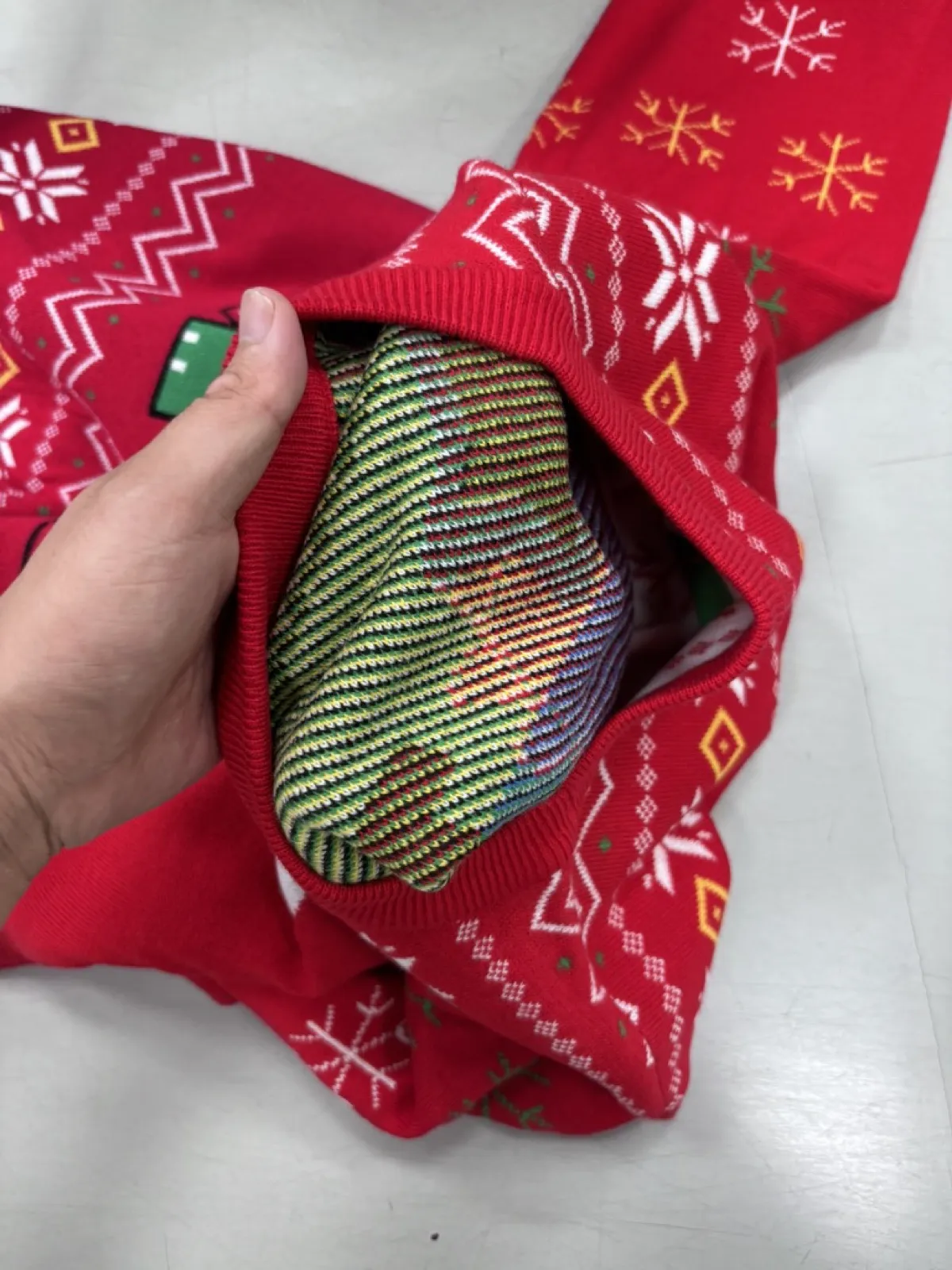
Tubular jacquard (air-layer)
The premium option. The yarns not used in the front pattern are tucked into a hollow "air layer" between the front and back faces.
- Feel: thick, structured, and warm. The front pattern is bold and crisp; the back is a clean solid color, with none of the messy yarn floats.
- Best for: winter coats, premium uniforms, high-value cardigans, and structured sweaters. This is the technique that makes a sweater feel expensive.
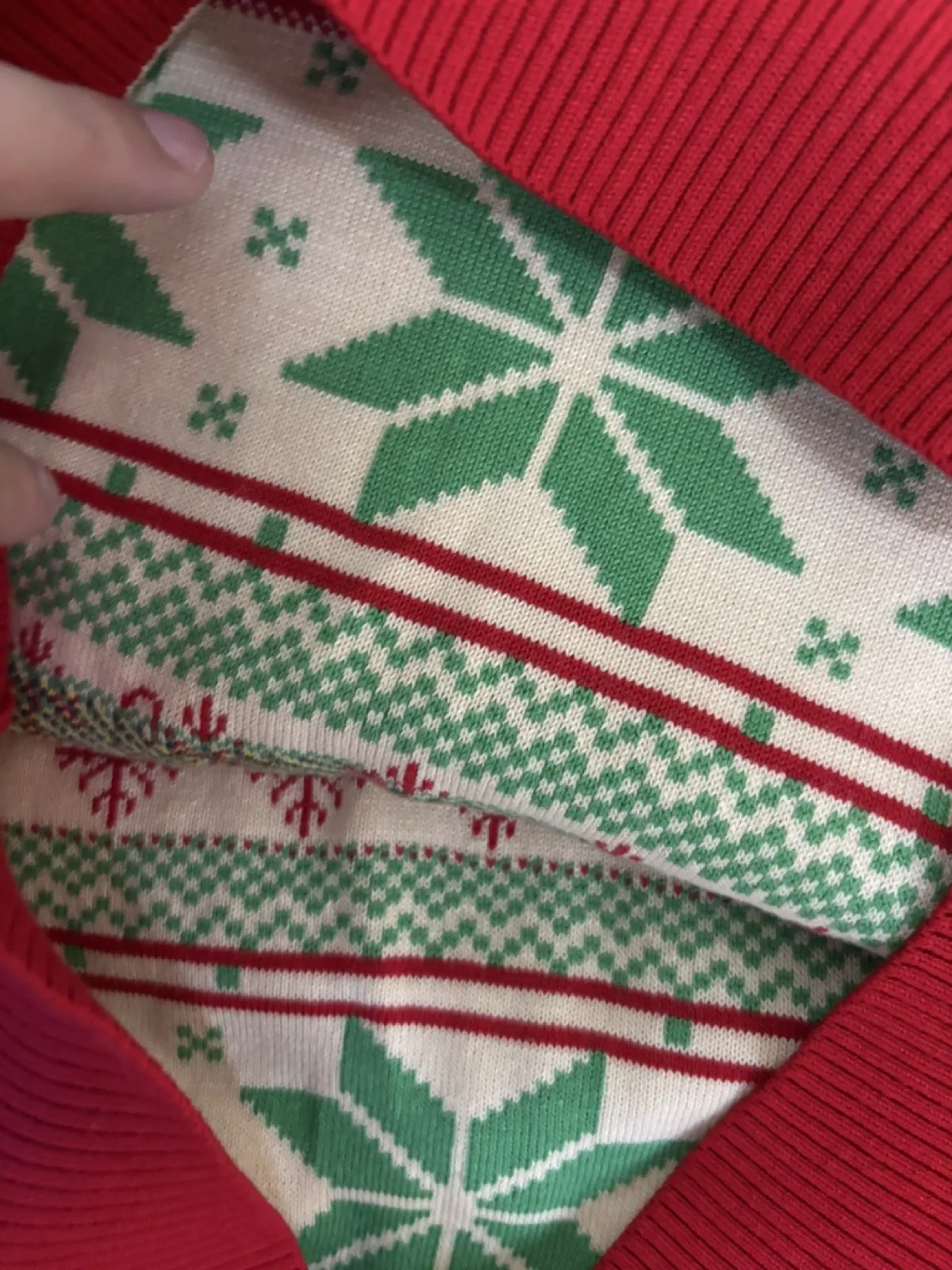
Net-back jacquard (mesh)
The lightest of the three. On the back, the yarns not used in the front pattern are knitted into an open mesh rather than a solid layer, so the sweater stays thin, airy, and breathable.
- Feel: light, thin, and soft — the most breathable of the three jacquard backs, with a fine mesh texture on the inside. Less bulk (and typically lower cost) than sesame back or tubular.
- Best for: summer-weight sweaters, lightweight spring knits, and long runs where weight and budget matter more than structure.
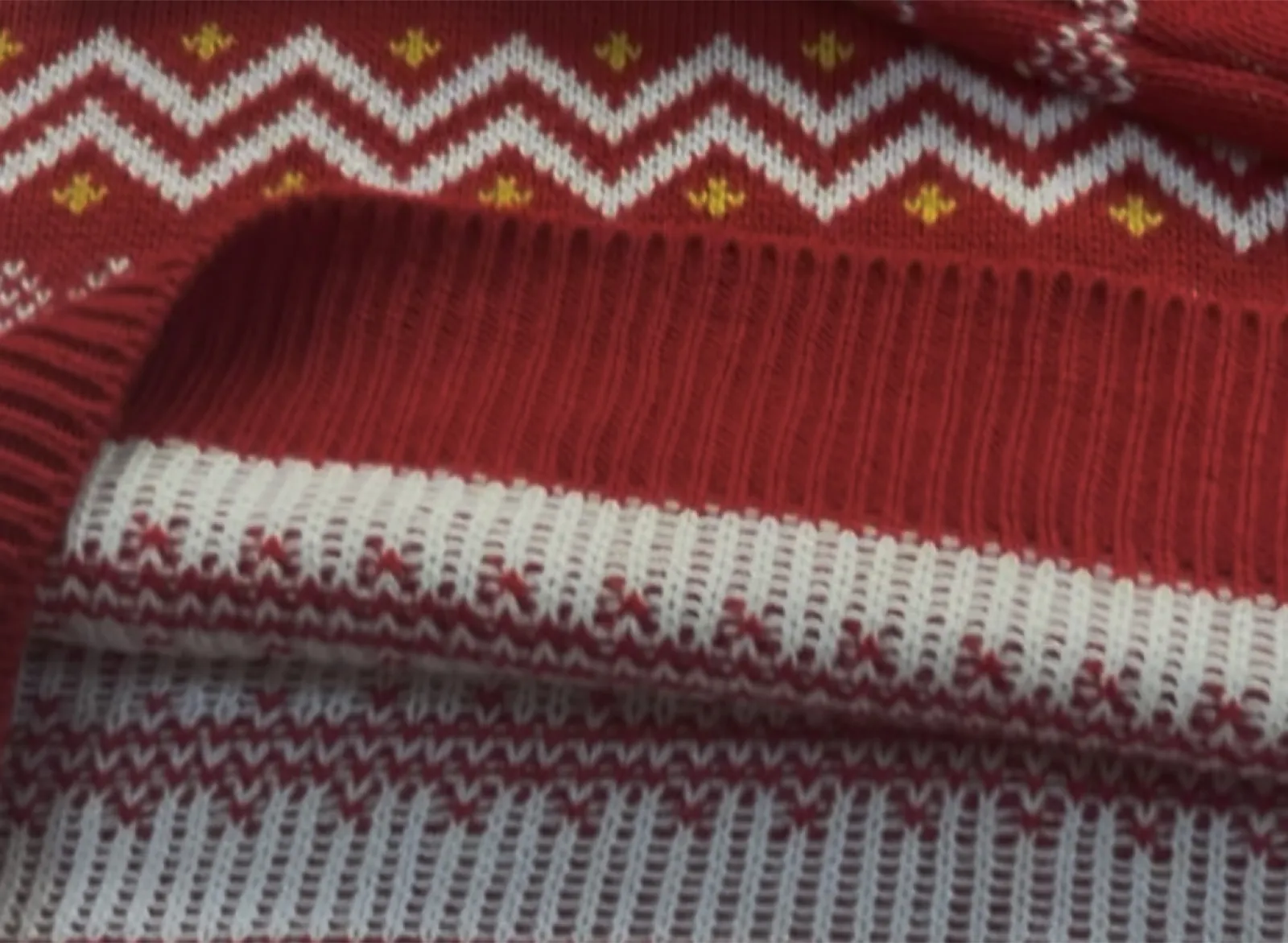
How to choose
Match the technique to your positioning — and to your holiday sweater program →:
- High-end or luxury → tubular jacquard. It delivers the weight and clean finish high-paying customers expect.
- Everyday wear or active → sesame back. It's comfortable, stretchy, and the standard for mid-market jacquard sweaters.
- Lightweight or warm-season → net-back. When you want jacquard's look in a light, breathable sweater, the mesh back keeps it airy and the cost down.
- Graphic-heavy or photographic → print. If your design has realistic imagery or fine branding, printing is the only realistic path — use high-quality digital printing to minimize stiffness.
Pro tip: in high-value custom work, these techniques are often combined — tubular jacquard for the body texture, with embroidery or high-density print for a central logo, to get a multi-dimensional look.
At a glance
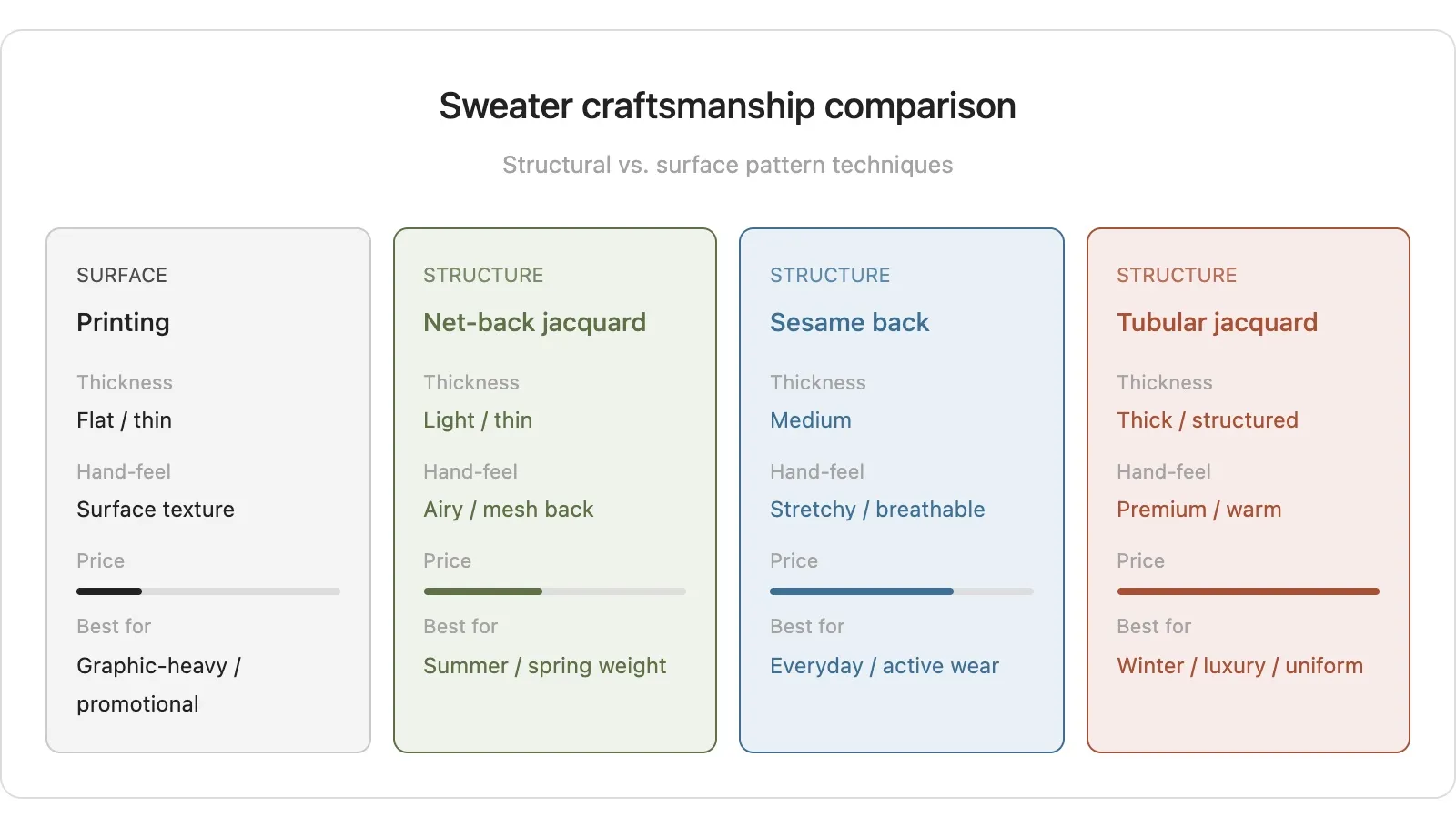
- Printing — flat, light, unlimited color, lowest cost, but can crack or fade. Best for graphic-heavy designs and giveaways.
- Net-back jacquard — light, thin, airy, low cost. Best for summer-weight and lightweight knits.
- Sesame back jacquard — medium texture, best stretch and breathability, mid cost. Best for spring/autumn, slim-fit, and socks.
- Tubular jacquard — bold, structured, thick and warm, highest cost. Best for premium, winter, and luxury.
FAQ
What's the difference between print and jacquard on a sweater? Print sits on top of the yarn — it's flat, cheap, and can crack or fade with washing. Jacquard is knitted into the fabric during production, so the pattern has real texture and won't crack or fade.
Which lasts longer: printed or jacquard sweaters? Jacquard. Because the pattern is structural — part of the fabric itself — it can't crack, peel, or fade the way a printed surface can.
Is jacquard always more expensive than print? Generally, yes. Jacquard needs skilled pattern design and knit programming, and the cost depends on the back finish — net-back is the lightest and lowest-cost, sesame back is mid-range, and tubular (air-layer) is the premium option.
What are the three jacquard back finishes? Sesame back (bird-eye) — medium-thin and stretchy; tubular (air-layer) — thick and structured, the premium choice; and net-back (mesh) — light, thin, and the most breathable.
Can you print on a jacquard sweater? Yes. In high-value custom work the two are often combined — a jacquard body with a printed or embroidered logo in the center — to get a multi-dimensional look.
The bottom line
Print and jacquard aren't good or bad — they answer different questions. Print wins on color, detail, and cost. Jacquard wins on texture, durability, and perceived value. Decide deliberately, not by default, and the garment will match the price your customer expects to pay.
We knit custom jacquard in Dalang — the knitwear hub — on computer flat-knit machines, with in-house pattern design and knit programming so your motif comes out crisp. Explore our custom Christmas sweater capabilities →, or tell us your market, target retail price, and ship date and we'll recommend a technique, yarn, and sampling timeline that fits.
Related: 5 Mistakes That Ruin Custom Christmas Sweaters (and How to Avoid Them) · Custom Knitwear Manufacturing