5 Mistakes That Ruin Custom Christmas Sweaters
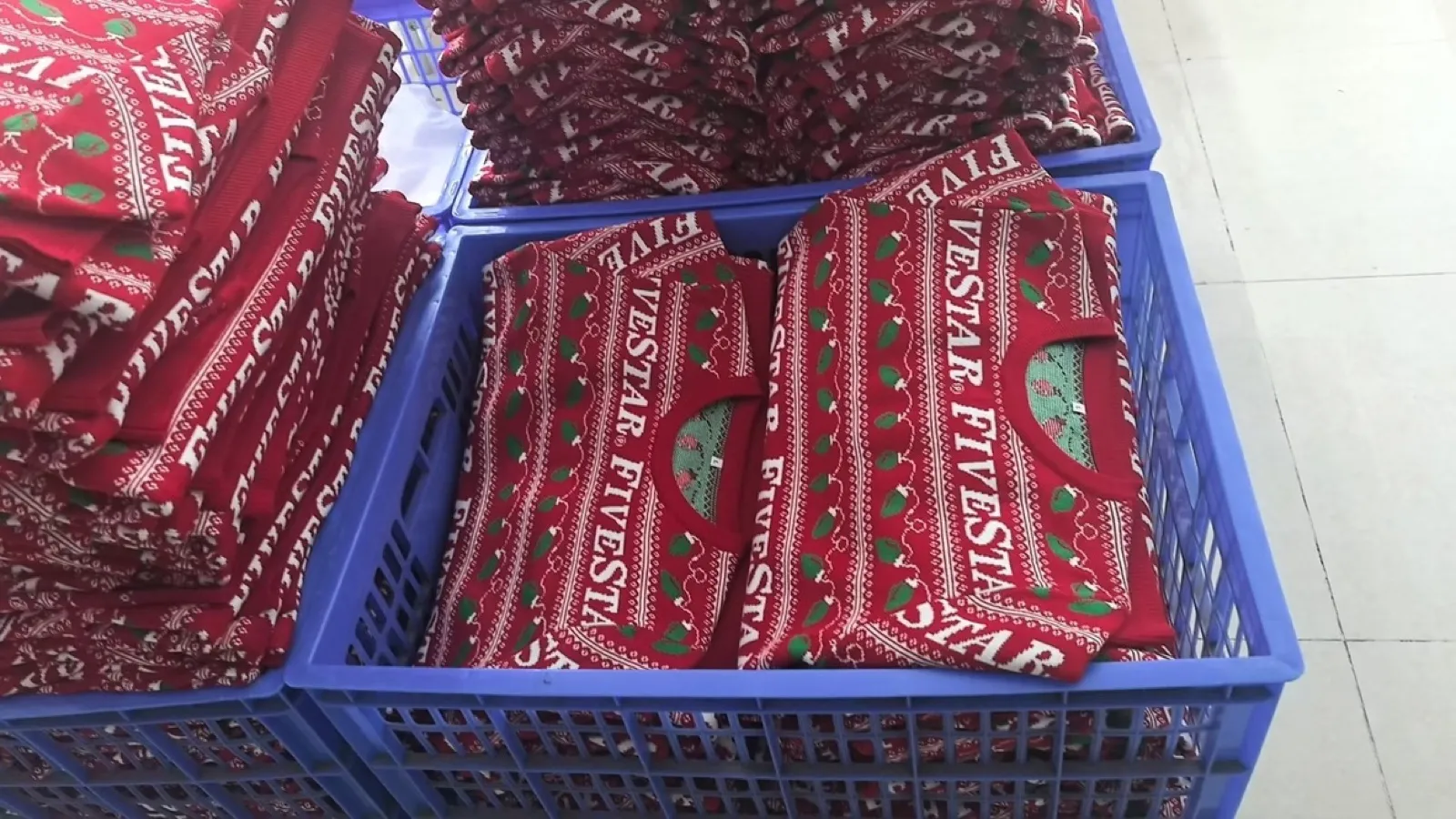
Christmas sweaters are a seasonal sprint. You lock designs in spring, produce through summer and autumn, and the goods need to be on shelves by early November. There is no second chance — a sizing error, a cheap-looking finish, or a sample that drags on for weeks means you miss the window entirely.
As a knitwear manufacturer with around 100 computerized flat-knitting machines in Dalang — the knitwear hub — we've watched dozens of brands hit the same five problems. Most of them were avoidable. Here's what goes wrong, and how to get it right.
Mistake 1: Confusing print with jacquard knit
Most buyers know they want a sweater with a Christmas pattern. Far fewer realize there are two completely different ways to get that pattern onto the garment — and they look, feel, and age nothing alike.
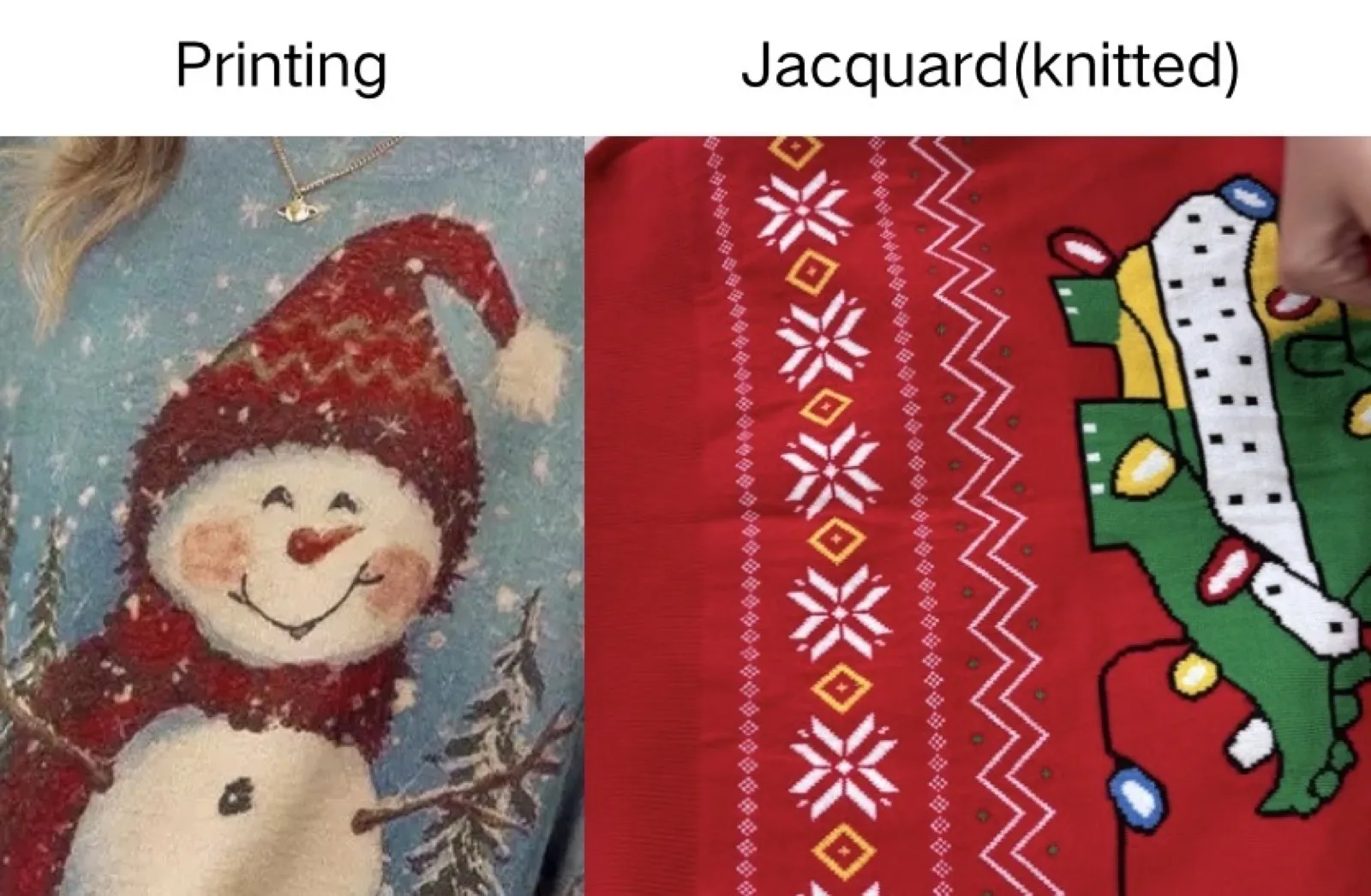
- Printed: the motif is printed onto the surface of an already-knitted sweater — screen printing, heat transfer, or sublimation. It sits on top of the yarn. It's fast and cheap, but the design can crack, fade, or peel with washing, and up close it reads flat and thin.
- Jacquard knit: the motif is knitted directly into the fabric using different colored yarns, stitch by stitch. The pattern is part of the sweater itself. It has real texture and depth, it won't crack or fade, and it signals quality the moment a customer touches it.
This is the single most expensive misunderstanding we see. A brand orders "patterned sweaters" expecting the thick, dimensional Fair Isle look from their mood board — and receives printed sweaters that feel thin and flat. By the time they notice, the production window is gone.
Rule of thumb: if you want a premium, giftable, "heirloom" Christmas sweater — jacquard. If you're doing a one-off promotional giveaway on a tight budget — print. Just decide deliberately, not by accident.
Mistake 2: Using the supplier's default size chart
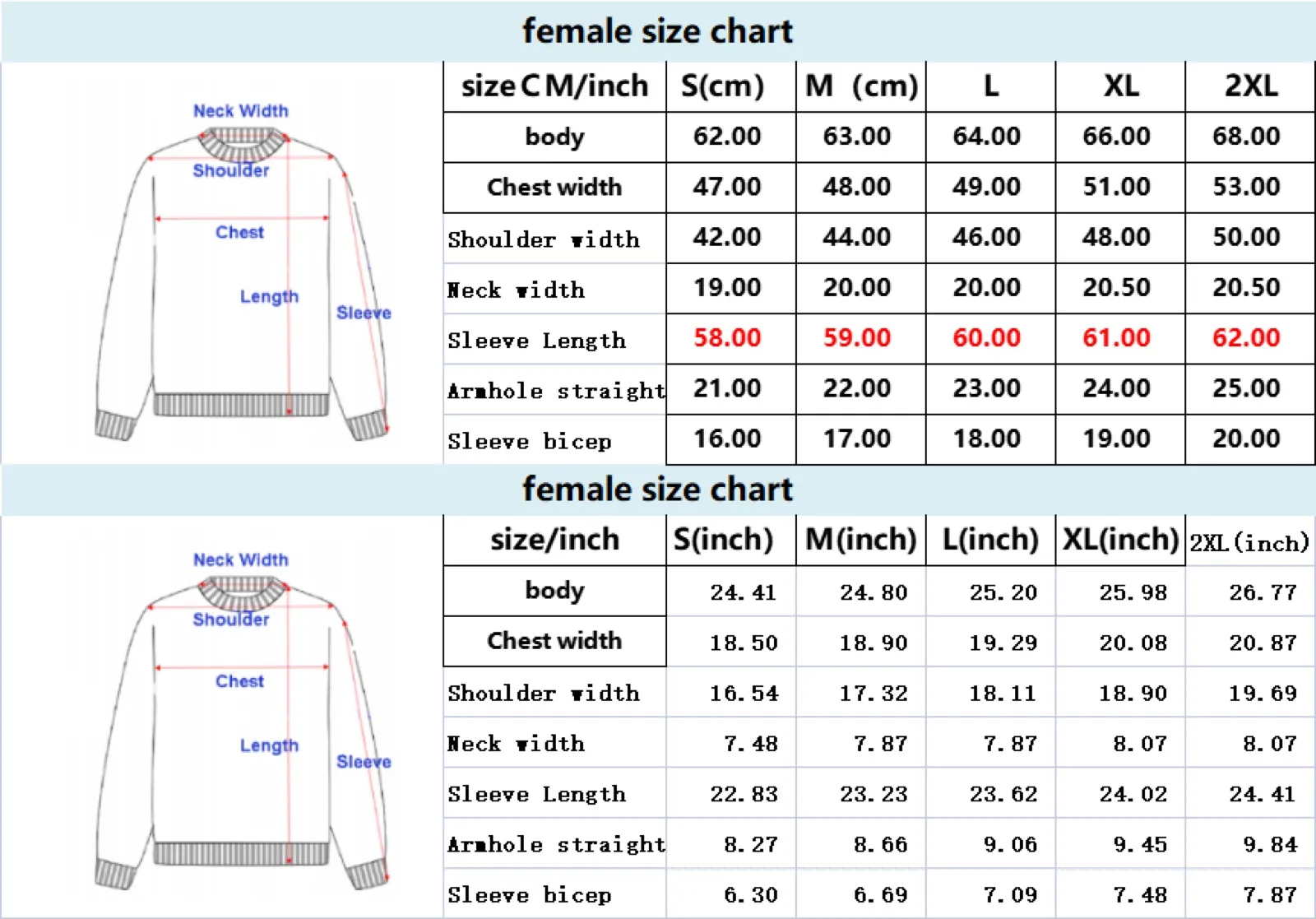
A supplier's stock size chart is built for their local market — usually a domestic Chinese or generic Asian fit. It will not match your customers in the US, UK, or Europe.
Build the size chart for your market. Don't copy ours. During sampling, have the sample made to your target country's standard measurements, then put it on a real person (or a fit model) and feed those notes back to the supplier before bulk.
And set the tolerance explicitly. Knitwear stretches, so measurements naturally vary more than a woven garment. ±2 cm on key points is normal and perfectly controllable — but it has to be written into the spec, or you'll be arguing about it after the fact. For grading between sizes, keep the step modest: 1–2 cm between sizes on chest, body length, and sleeve. Wider jumps are exactly what makes a size M fit like an S.
Mistake 3: Choosing the wrong yarn
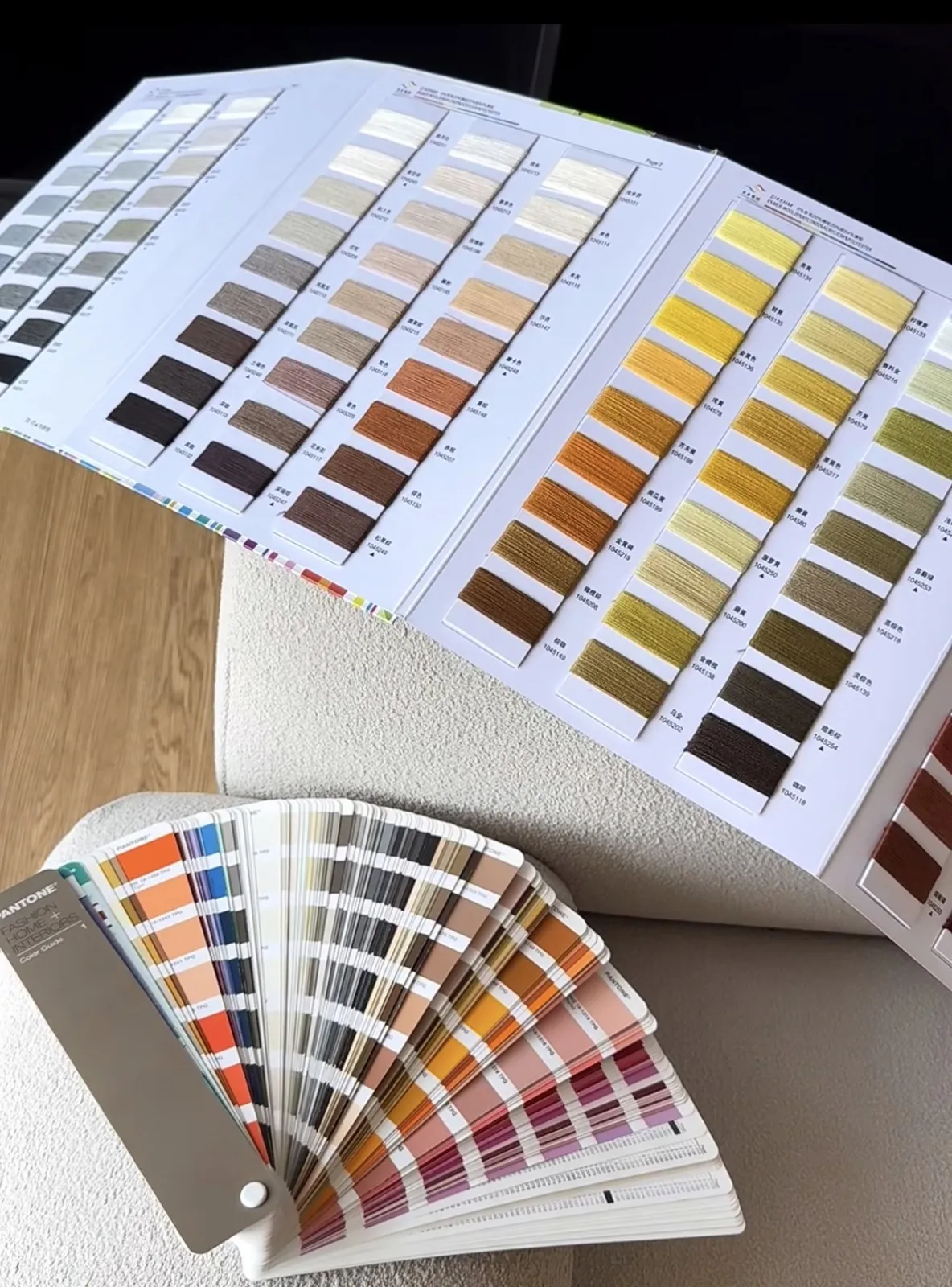
The yarn is a positioning decision, not just a cost line.
- Acrylic: soft, warm, holds bright colors beautifully, and inexpensive — but 100% acrylic pills and looks tired fast.
- Cotton: durable but stiff and low-stretch. It fights the thick, structured patterns that make a Christmas sweater work.
- Acrylic–cotton blend: the sweet spot for most brands. Acrylic brings softness and stretch; cotton brings durability and a cleaner hand-feel. It balances cost and comfort better than either fiber alone.
- Wool: the premium option. Warm and soft, and it knits a crisper, richer pattern — at a higher price point.
Let your positioning decide. A mass-market retailer chasing a $15–20 retail price runs an acrylic–cotton blend. A boutique doing a limited "luxury" drop runs merino or lambswool. Pick the fiber that matches the price your customer expects to pay.
Mistake 4: Skipping the two-stage sampling
Sampling a Christmas sweater should happen in two deliberate rounds:
- First sample — one garment to check the silhouette, the fit, and — critically — whether the jacquard pattern knits out crisp. If there are no major issues, send your feedback and the factory adjusts.
- Pre-production sample — before bulk, the factory produces the corrected sample and you confirm by photo (or a final fit check). This is the sample that locks the standard for the entire bulk order.
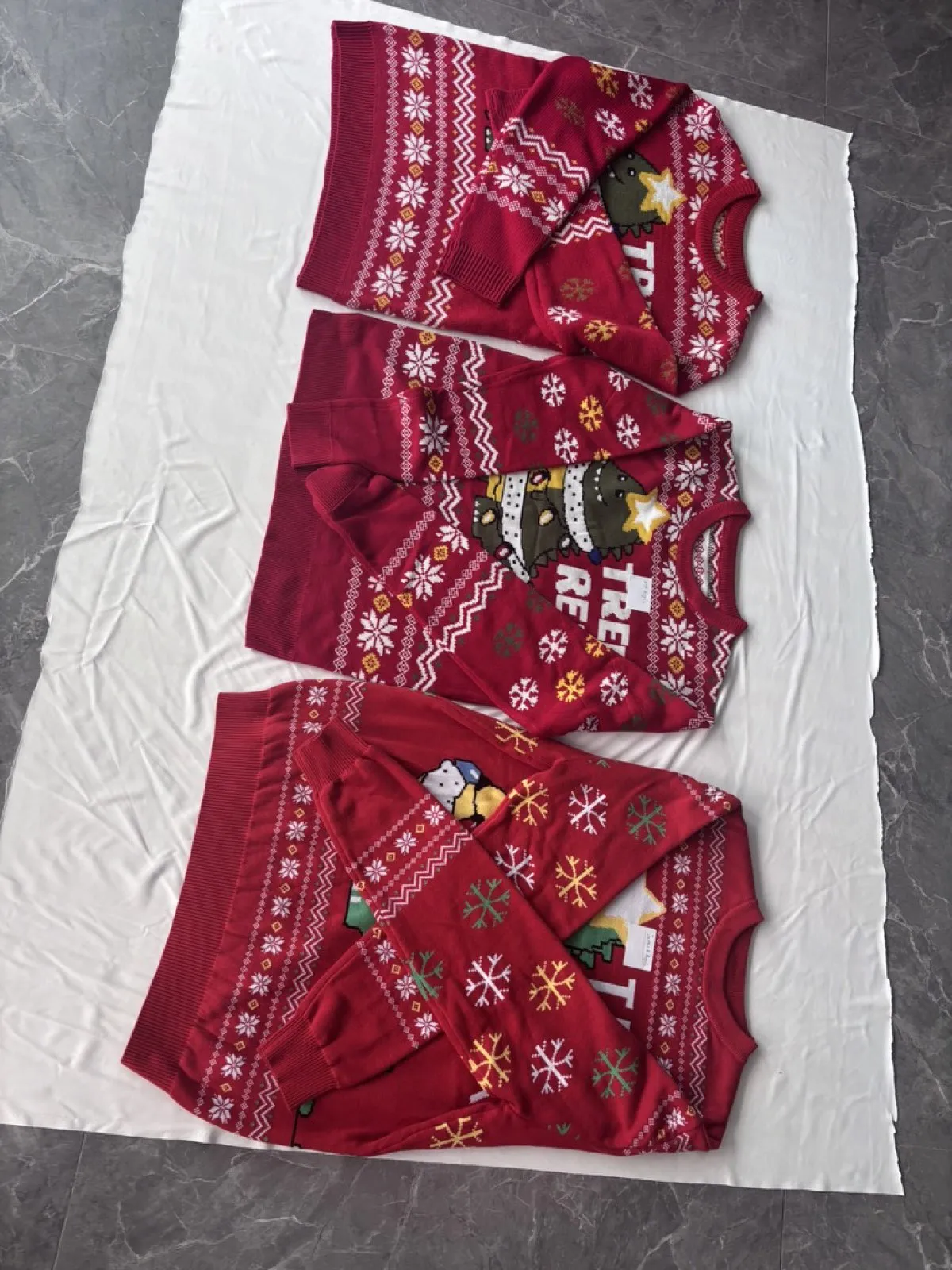
Brands that skip the PP sample, or try to squeeze two rounds into one, are gambling with hundreds of units. The pre-production sample is cheap insurance against a container full of surprises.
Mistake 5: Chasing machines instead of know-how
When buyers vet a sweater factory, they ask about machine count. Fair enough — but for Christmas sweaters, machines are only the entry ticket. What actually separates a good factory from a weak one is two skills most buyers have never heard of:
- Pattern design & charting: turning your artwork into a knit-ready grid that tells the machine which yarn color to knit in every single stitch. A good pattern designer makes your reindeer, snowflake, or lettering come out crisp; a weak one makes it jagged and blurry.
- Knit programming (knitting calculation): converting the garment's measurements into machine parameters — stitch count, row count, gauge, stitch types, and shaping. In effect, it's the "programming" behind the sweater. Get this wrong and the sweater comes out the wrong size even on a perfect machine.
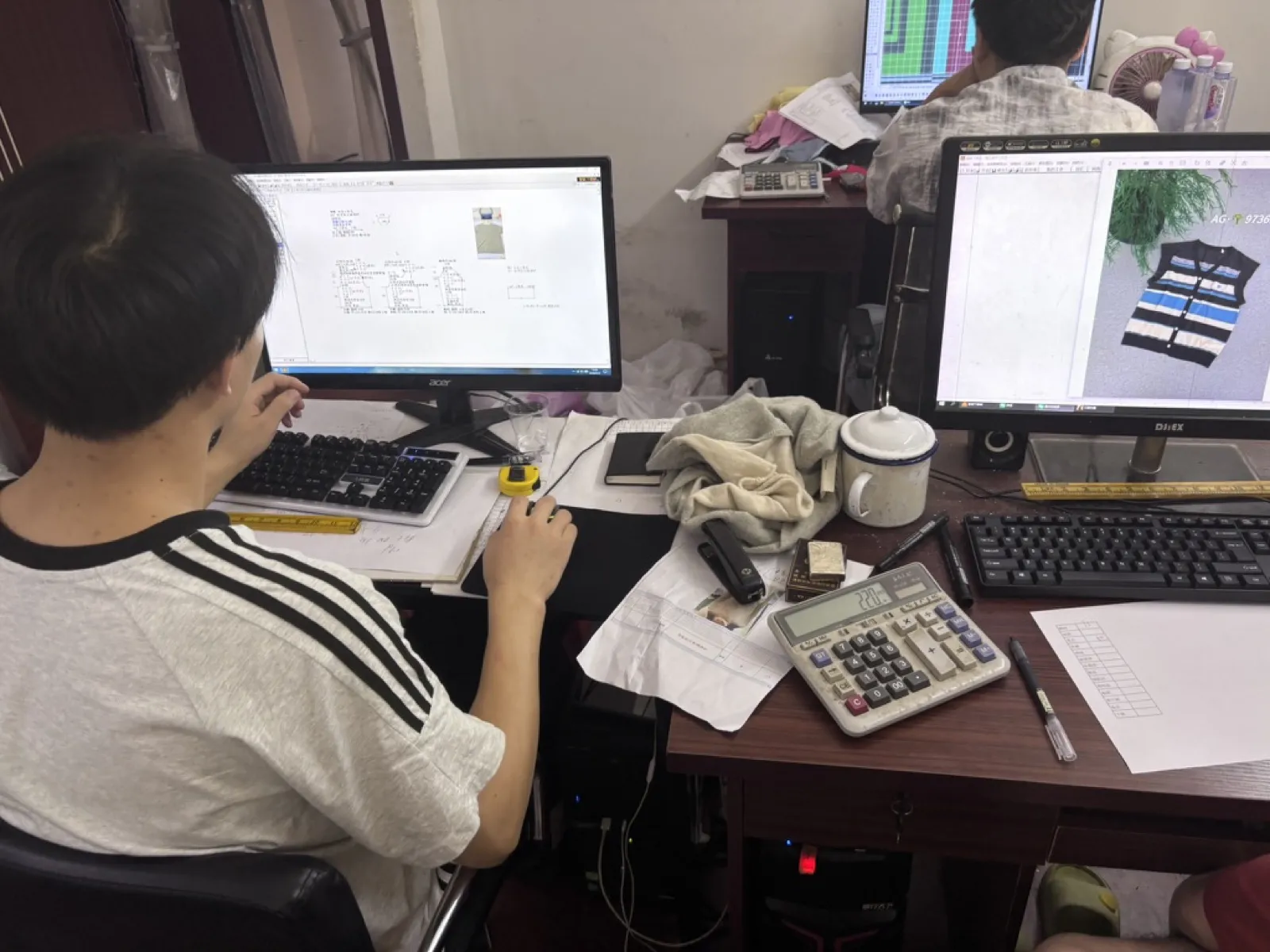
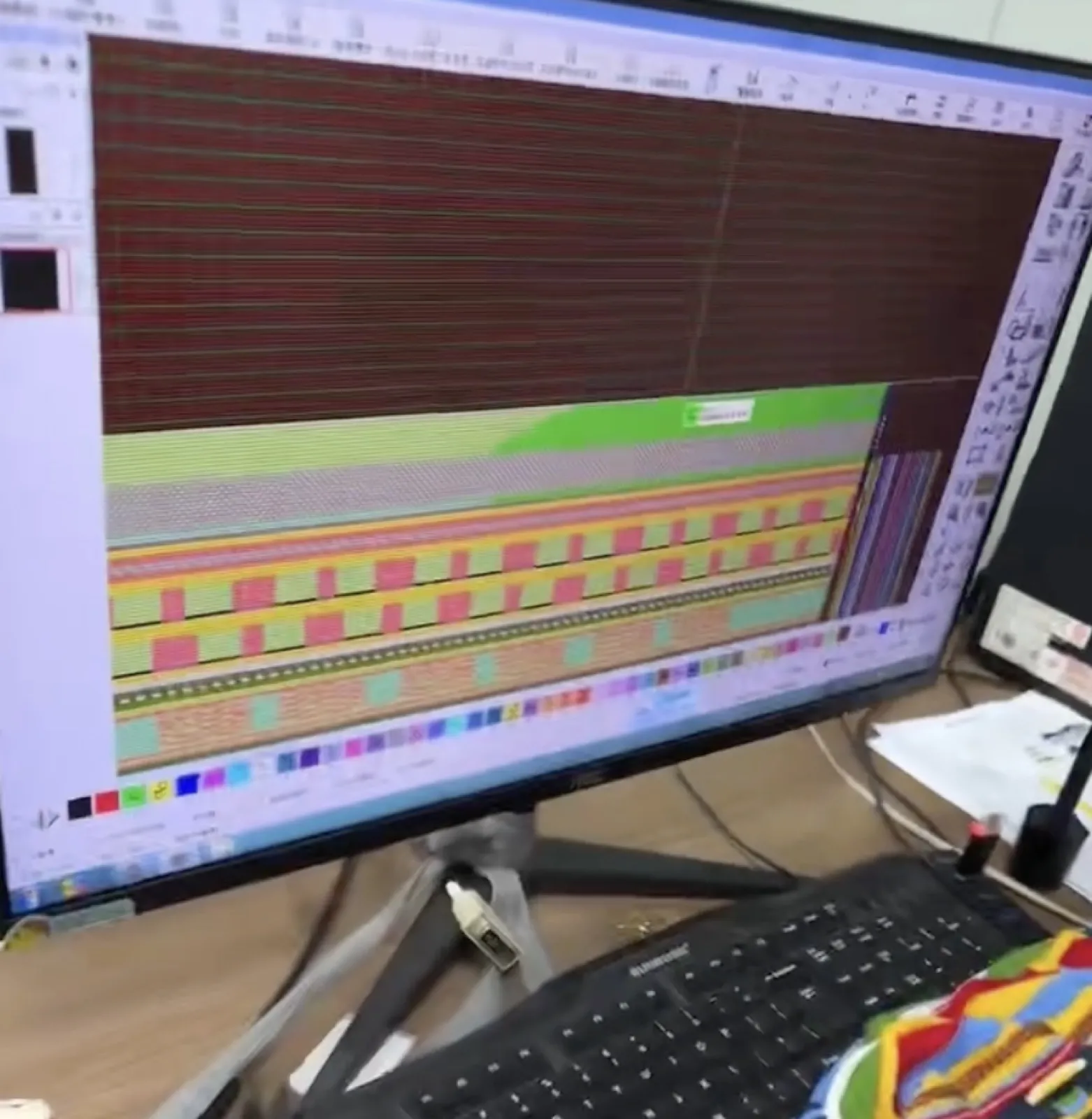
A factory can own 200 machines and still deliver blurry, mis-sized jacquard if its pattern design and knit programming are weak. Ask specifically for Christmas-sweater samples and turnaround times — complex Fair Isle patterns are exactly where these two skills show up.
The bottom line
Most of these mistakes don't come from bad intentions. They come from buyers treating a Christmas sweater like a basic tee. It's a technical product with a hard deadline. Nail the finish (jacquard vs print), the sizing, the yarn, the sampling, and the factory's real expertise — and the season takes care of itself.
Ready to avoid these mistakes on your next run? Explore our custom Christmas sweater capabilities →, or meet the factory → If you already have a design in mind, tell us your market, your target retail price, and your ship date — we'll come back with a yarn and finish recommendation, a size chart built for your customers, and a sampling timeline that keeps you on schedule.