How to Tell a Real Jacquard From a Print, With Three Tests
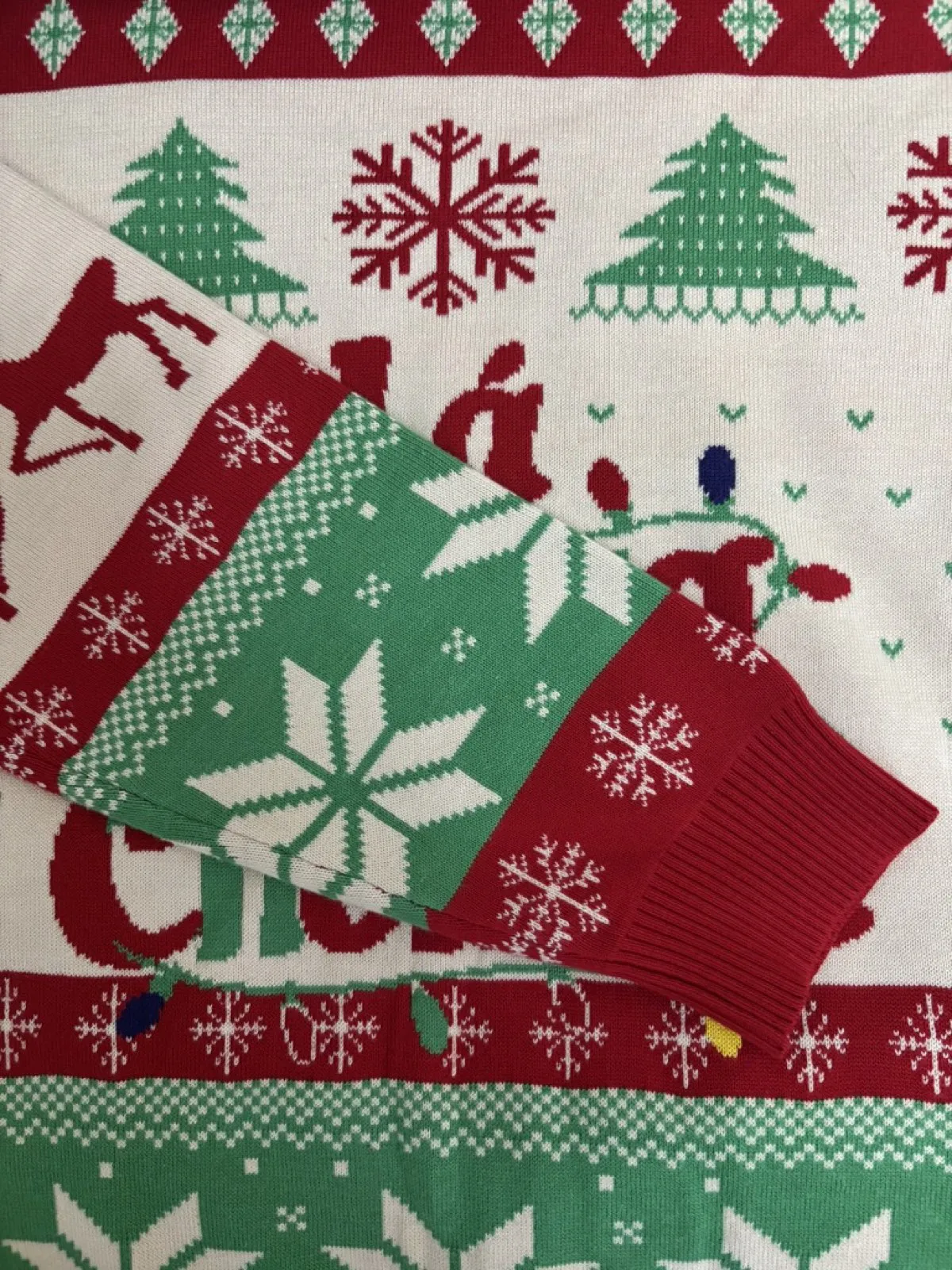
You have two quotes for the same sweater.
One is a third of the other. Both suppliers call it jacquard.
You cannot settle this by looking at photos. A photograph of a print and a photograph of a jacquard can be made to look identical, and often are.
Why the two costs are so far apart
A print is applied to a finished knit. The fabric is bought or knitted plain, then ink or film goes on the surface.
A jacquard is the fabric. The colour is carried by the yarn, and the pattern is built row by row on the machine.
Different machines, different programming, different running speed, different wastage. That is where the gap comes from.
Which means: if someone is quoting jacquard prices for printed goods, the difference is not a discount. It is a different product.
Test one: ask for the back
Every real jacquard has a back.
Look at the reverse of the panel. If the pattern is knitted in, the back carries float threads or a second knit structure. It looks like a fabric, with yarn running across it.
A print has a pale or raw back. Ink sits on one face. Sometimes it bleeds slightly through, but it does not become a structure.
Ask for a photograph of the inside of the panel, not the finished garment.
Test two: stretch it
Take the area with the pattern and pull it sideways.
Knitted colour stretches with the fabric, because it is the fabric. The pattern distorts along with the knit and springs back.
A print cracks. The ink layer is less elastic than the knit underneath, so it fractures along the knit lines. On a worn garment you can see this as fine white crazing at the bends.
Test three: ask the needle count
This one cannot be faked.
Ask: how many needles by how many rows is this pattern?
A jacquard is programmed as a grid. Anyone who produced it knows the grid. Anyone who printed it has no grid to know.
You do not need to understand the number. You only need to notice whether it arrives instantly and specifically, or gets deflected.
What to do with a suspicious sample
If you already hold one, the three tests take about two minutes. Back, stretch, question.
Send the photos to us and we will tell you which it is. No charge, no sales pitch — you may not be buying anything from us, and you should not be paying a jacquard price for printed goods either way.
What we put in writing
On every quote we state the craft name, the gauge, and the needle count by row count for the jacquard area.
When we send a sample we photograph the face, the back, and the inside stretched open.
If your design will not survive as a jacquard, we say so and quote the print instead. You should know which product you are buying.
Related: Four Questions That Prove Whether They Can Really Knit It · Print vs Jacquard: Which Lasts · 13-Colour Jacquard