Four Questions That Prove Whether They Can Really Knit It
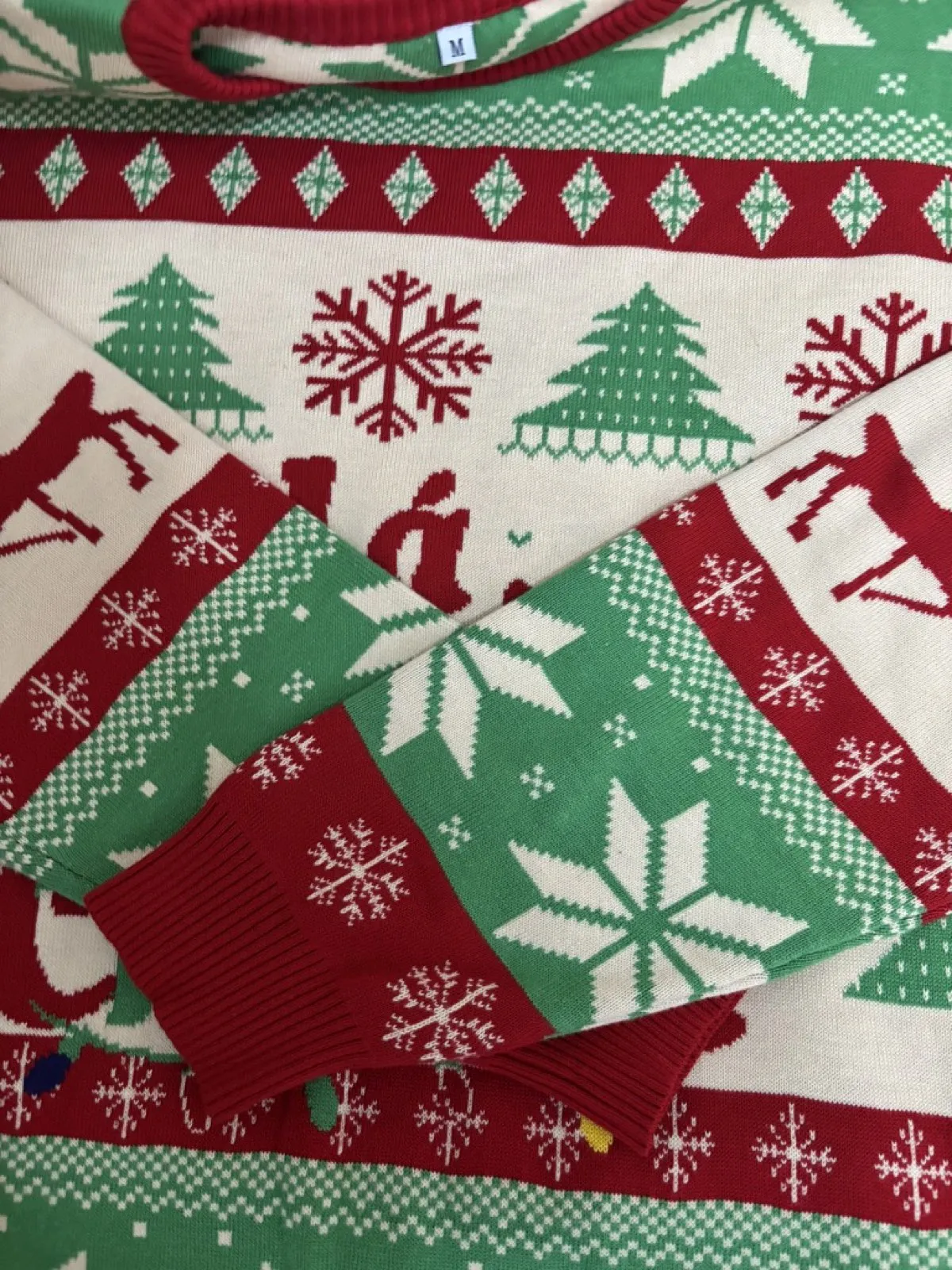
You sent the same design to six suppliers.
Five said they can do it.
Not one of them told you what will be slightly wrong when it comes back.
Why "can do" is worth nothing
"Can do" costs the supplier nothing.
If it turns out they cannot, there is always a reason ready. The yarn was out of stock. The artwork was unclear. You approved the sample.
A real answer is more expensive to give, because it comes with limits attached. That colour count is too high. That line is thinner than the needle can hold. That gradient will band.
Suppliers avoid saying those things. It sounds like turning business away.
So the buyer hears a yes and discovers the limits three months later, in bulk.
The four questions
Ask these before you send any money. Not one at a time — all four in one message.
1. Which gauges do you run? Gauge is how many needles per inch. It decides how fine the knit can be. A mill that runs a narrow gauge range can only make one kind of fabric. A mill that answers with a specific range is describing its own machines, not a catalogue.
2. How many needles by how many rows is the usable jacquard area? This is the single most revealing question. It is a number, and it only comes from someone who has actually programmed a chart. Middlemen cannot invent it convincingly.
3. What are your minimum line width and minimum letter height? Every design has thin details — a serif, a scratch line, a tiny logo. Below a certain width the needles cannot resolve it and the machine drops stitches. The mill that knows its own floor knows this number.
4. Which effects on my design would you change, and why? This is the question that separates the two kinds of supplier. A real mill looks at your file and says: this gradient will band, this edge will soften, this detail needs to be one stitch thicker. A middleman says it looks fine.
How to read the answers
Fast answers with specific numbers: a mill.
Vague answers that circle back to price: not a mill, or not the person who knows.
An answer that is all four questions but no limits: someone who did not open your file.
You are not testing whether they are polite. You are testing whether anyone has actually costed your design.
What the limits are for
Limits are not a rejection.
A pattern that loses one soft gradient and keeps a crisp edge is usually a better product than one that fails at both. But you can only make that decision if someone tells you the trade-off before production, not after.
That is the whole point of asking early. You are buying information, not permission.
What we do
We answer all four, in writing, before quoting.
Then we mark the places on your design that will change and say why. If something cannot be done at all, we say that instead of quoting around it.
Send the artwork and the size range. You get an assessment with the limits named.
Related: How to Tell a Real Jacquard From a Print · When a Factory Says Your Design Cannot Be Made · 13-Colour Jacquard