How to Choose a Custom Beanie Manufacturer
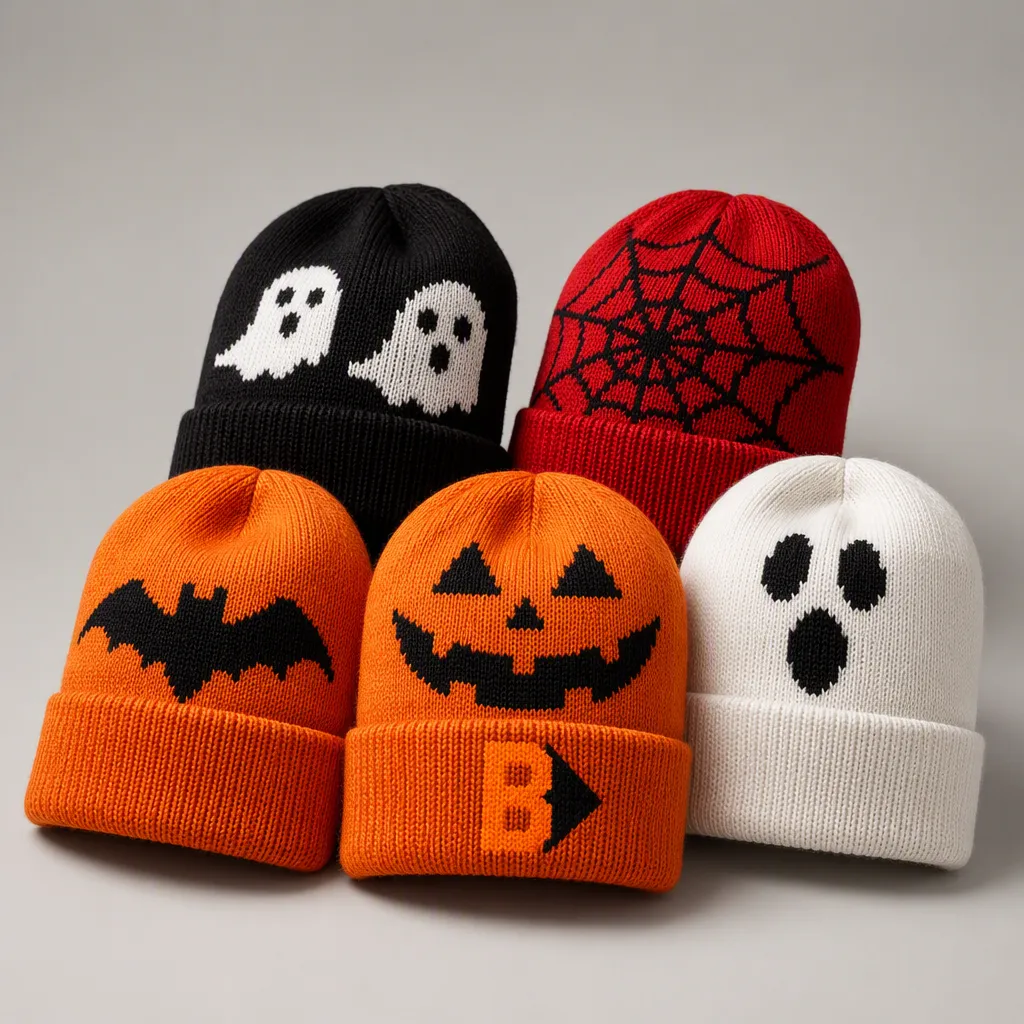
Most beanie suppliers look identical from the outside. They all have a website, they all answer quickly, and they all send the same three stock photos. The difference only shows up after the sample is approved — which is the worst possible time to discover it.
These seven questions force the difference into the open before you commit.
If you would rather just look at what the answers look like, our custom beanie manufacturer page shows the floor, the logo techniques and the terms in one place, and the beanie factory walk-through shows how a logo becomes a cuff.
1. Do you knit on your own floor?
This is the question that decides everything else. A factory owns the machines; a trading company sends your artwork to somebody else's factory, adds a margin, and answers your technical questions second-hand.
You can usually tell without asking hard: ask what machines they run and what gauge they knit at. A real knitwear factory answers immediately and specifically. A trading company says "we have many factories" — which is not the same thing as owning one.
Why it matters commercially: with an in-house floor, a difficult design is a production question. Without one, it is a negotiation between two companies, and you are not in it.
2. How is the logo actually applied?
"Custom beanie" covers at least three different products:
- Jacquard knitted in — the motif is part of the fabric, produced row by row on the machine
- Embroidery — thread stitched into a finished knit
- Woven badge — a separate label sewn on the front or side
They do not age the same way. A knitted-in logo cannot peel or crack because it is not a layer sitting on the fabric. Embroidery gives a dimensional look but adds a treated surface to a soft knit. A woven badge is the cheapest hybrid and the most visible shortcut.
Ask which one they are quoting, because a cheap price is often a different product rather than a better deal. We cover the trade-offs in detail in jacquard vs embroidered beanies.
3. What does the minimum depend on?
Any supplier who gives you a minimum without asking about your colour count and artwork has not thought about your order.
The real answer depends on how many colours are in your chart, how complex the motif is, and which machine it runs on. A two-colour cuff logo and a full all-over jacquard crown are not the same run, and pricing them as if they were is how buyers end up with a surprise.
So the useful question is not "what is your MOQ" but "what is my minimum, for this artwork?" Send the design and ask for the answer against it. A manufacturer who can do that is one who actually costs production.
4. What will the sample actually prove?
A sample program is only useful if the sample is made the same way as the bulk order — same machines, same yarn, same chart.
Watch for suppliers who send a beautiful sample from a different production line, then deliver a bulk run that behaves differently. Ask plainly: is this knit on the machines that will run my order, from the yarn you will actually use?
Ask what the sampling window is, whether the sample fee is credited against the bulk order, and how many rounds you get before production starts.
5. How many colours can you knit in one chart?
This is where suppliers quietly diverge. Many flat-knit operations cap a jacquard chart at four to six colours because more colours mean more yarn feeds, more carrier changes and slower running.
If your artwork has a gradient, a detailed mascot or fine lettering, that cap decides whether your design survives at all. Ask for the maximum colour count per chart, then ask to see a piece they have actually produced at that count — not a rendering.
6. What happens between sample approval and shipment?
"Production is two weeks" answers a different question than "what happens during those two weeks".
Ask for the quality checkpoints: are yarns inspected on arrival, is there an inline check during knitting, who looks at the finished pieces, and do you get photos before dispatch? Also ask what happens if the run is wrong — that answer tells you more about the supplier than any certificate.
7. What is included in the delivered price?
Two quotes that look 30% apart are often not the same delivery term. Ex-works means the goods leave the factory gate and everything after that is yours: inland transport, export clearance, freight, duty, brokerage, last mile.
Ask for both an ex-works and a delivered figure, then compare landed cost — not the number in the email subject line. A DDP quote folds freight and duties in, so the comparison is honest.
Red flags worth acting on
- A price given before anyone asked about colour count, yarn or quantity
- A minimum quoted without seeing your artwork
- Refusal to name the machines or the gauge
- Samples that arrive from a different production run than the one being quoted
- No answer to "what happens if the goods are wrong"
- Stock photos presented as recent production
What to send in your first message
You do not need a tech pack to start. Send:
- The artwork, or a photo of a beanie whose cuff you like
- Roughly how many you need for a first run
- Your target delivery date and destination country
- Whether the logo should be knitted in, embroidered or a woven badge
That is enough for a real answer. Compare our custom beanie manufacturer page if you want to see how we answer these seven questions, or go straight to a wholesale programme or a private label run.
Related: Custom Jacquard Beanies: MOQ, Lead Time & Logo Options · Jacquard vs Embroidered Beanies · Custom Beanies in Bulk