Bulk Personalized Christmas Sweaters: Cost per Unit
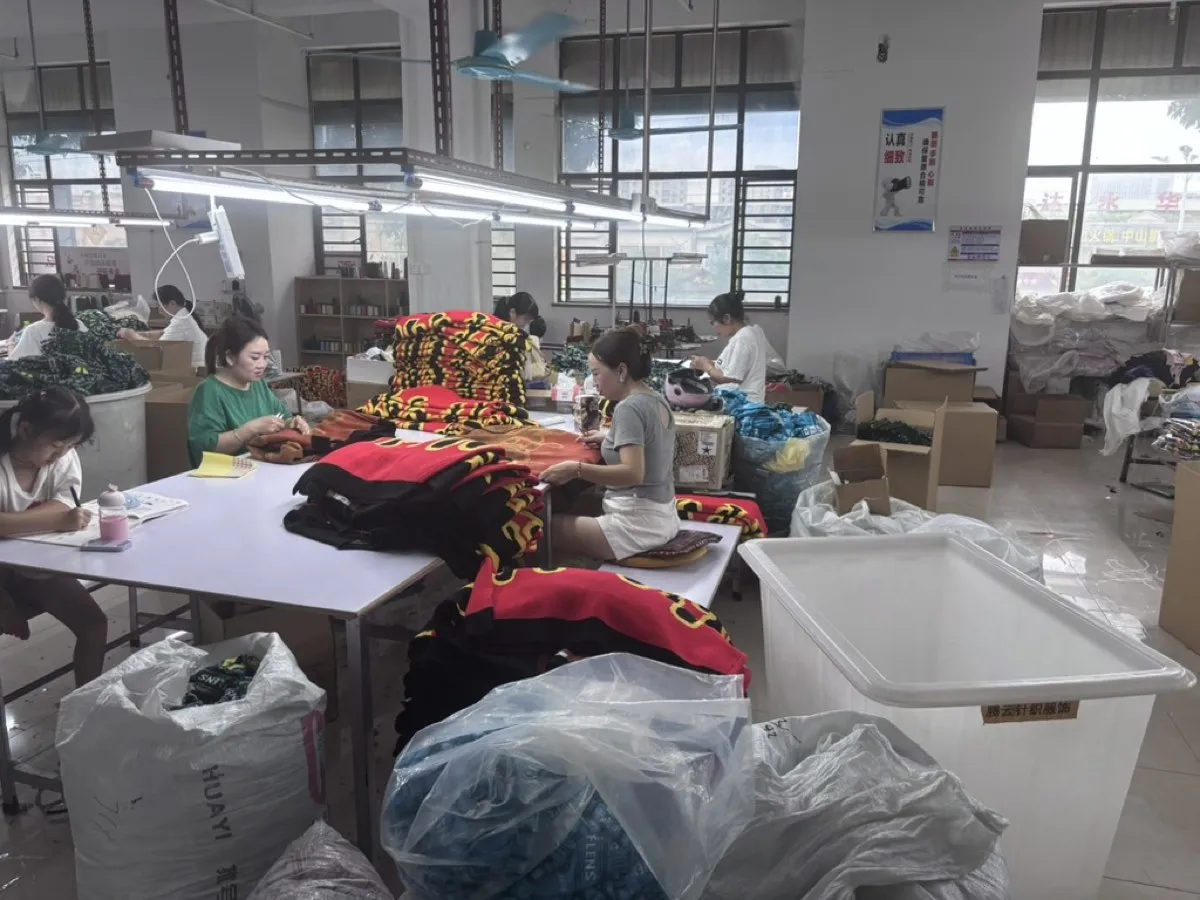
A bulk personalized Christmas sweater is priced from two parts, and buyers usually account for only the first: the base knit, plus the personalization on top of it. Yarn, knitting technique, how each piece is personalized, and how many you order move both parts.
A made-to-order sweater has no single list price — but it does have a starting price, and a reference point beats a blank. So we publish the one specification we can put a firm number on, and then exactly how far the price moves when you change each variable. That is more useful than a headline figure, and it is what lets you read a factory quote and know where the money is going.
The number people underestimate is not the sweater. It's the personalization. Adding one common design to 2,000 sweaters is cheap; adding 2,000 different names is a different cost model entirely.
The starting price: $11.50 per unit, DDP to the USA
The number below is one precise specification. It is not a category average, and it is not a bait figure.
| Specification | | |---|---| | Yarn | 100% acrylic | | Jacquard colours | 3 | | Sizes | mixed sizes within that design | | Personalization | woven label only, no knit-in names | | Delivery | DDP to the continental USA — sea freight, US duty and clearance included |
A fourth jacquard colour is a separate quote. Colour count is the most expensive variable in the whole specification, because every extra colour costs machine time on every piece knitted — not once at setup.
At the top of the same range, around $18.00, you are buying a materially different garment: a fuller colour chart, a wool blend, knit-in personalization, or retail-ready packaging.
What moves the price, and whether it moves once or on every piece
Most quotes give you a number without telling you which lever produced it. This is that map.
| What you change | Direction | Fixed setup, or per piece? | |---|---|---| | Extra jacquard colours | up, steeply | per piece | | Heavier yarn / higher fabric weight | up | per piece | | Wool or cashmere instead of acrylic | up | per piece | | Imported rather than domestic machine | up | per piece, at the machine hour rate | | More intricate chart, finer detail | up | one-off programming, plus slower knitting | | More sizes in the run | up, mildly | mostly one-off grading | | Simpler personalization (label instead of knit-in) | down | per piece |
The practical rule: the top half of that table is where a price is won or lost. Cutting yarn quality to hold a price is the one saving that shows up in the finished garment.
The terms of that number
- The figure covers one specification: 100% acrylic, a three-colour jacquard, DDP to the continental USA by sea.
- Outside the USA we quote separately. Duty and freight differ by country, and the difference is not small.
- Air freight and multi-design orders are outside it — a second design carries its own charting and its own machine setup.
- This figure is valid until 2027-01-02. After that it is withdrawn rather than left to go stale at the bottom of a search result.
Why this is roughly half what a US custom shop quotes
The same specification typically lands at $25–$45 through a domestic custom-apparel reseller. The gap is not yarn quality. It is freight repositioning, duty handling, design amortisation spread across a 25-piece minimum instead of a 100-piece one, and reseller margin. We knit on our own Dalang floor and sell direct, so that layer is not inside your price.
How the per-unit number is built
Every quote is the same four blocks added together, then divided by quantity:
- Base knit — yarn plus machine time for the pattern. Scales with quantity.
- Personalization — the method you choose (label, embroidery or knit-in name). Scales with the number of uniquely personalized pieces.
- One-off setup — pattern charting, machine programming, and digitizing if you're embroidering. Fixed, no matter how many you order.
- Trims and packaging — woven labels, hang tags, gift boxes. Scales with quantity.
The setup block is the reason quantity tiers exist at all. Spread it over 200 pieces and it sits visibly in your unit price; spread it over 2,000 and it nearly disappears.
The starting price above is the only figure we will stand behind without your brief. Everything past it comes from your own specification — see what a manufacturer needs to quote you.
What "personalized" actually means — and why it changes the price
"Personalized" is used loosely in this category, and the three meanings have very different cost behaviour at bulk:
1. Custom design (one design, many pieces)
The standard bulk job: your artwork is charted and programmed once, then knitted across the whole run. Setup is a fixed cost, so the per-unit price falls steeply with quantity. This is what most bulk orders actually are.
2. Personalization per person (a different name on each piece)
Now the setup is no longer once. Every unique name, initial, or number is its own small piece of programming or machine work. That breaks the usual "more volume = cheaper per unit" curve: your design volume lowers the knit price, but your name volume doesn't lower the personalization price the same way.
This is the classic corporate-gift or family-set order — 500 staff, 500 names.
3. Per-piece trims (labels, tags, packaging)
The quietest option: a woven name label or printed tag inside each piece, so every sweater is individually identified without touching the knit. Cheapest per unit, least visible.
The three ways to personalize, compared
- Woven or printed name label — the lowest add per unit and no setup worth counting. Best for 500+ unique names where the identification can be discreet.
- Embroidery (name or initials) — a mid add per unit, plus a one-off digitizing fee per design. Visible, dimensional, and the usual choice for a few hundred pieces.
- Knit-in jacquard name — the highest add per unit, and every new name pattern is its own programming job. Reserve it for premium gift sets with a small number of unique names.
The rule of thumb: the more unique names you have, the more you should push personalization toward embroidery or labels rather than knit-in. Knit-in names look the best and cost the most, and the cost penalty grows with every new name.
Why bulk lowers the per-unit price
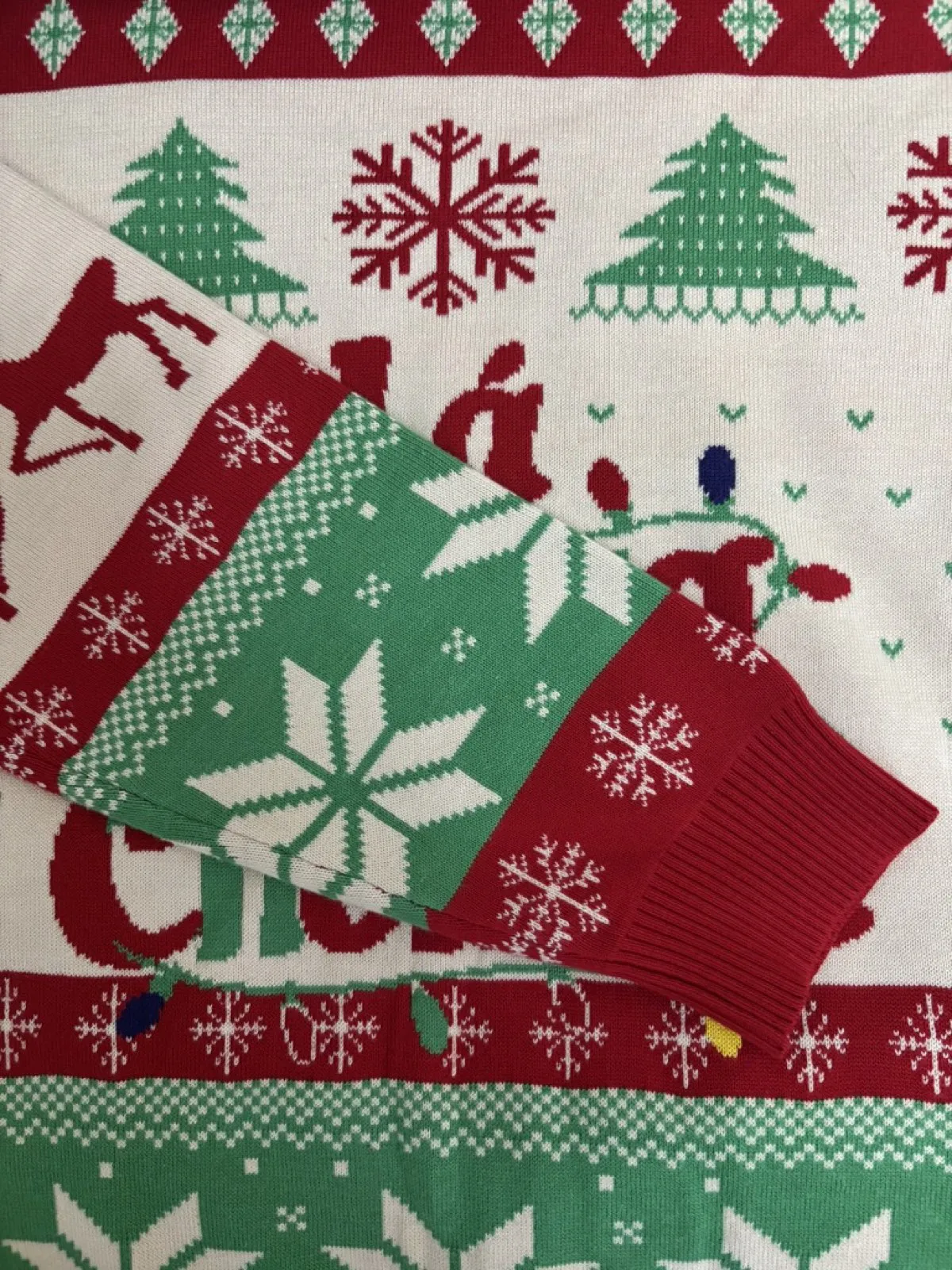
Two costs are fixed no matter how many you order:
- Pattern charting — turning your artwork into a knit chart
- Machine programming — setting the machine up to run that chart
Spread over more pieces, each unit carries less of that fixed cost:
- Sample (1–3 pcs) — highest per unit; covers setup plus the sample fee
- 100–200 pcs — setup still visible in the price
- 300–500 pcs — setup largely absorbed; this is where most wholesale orders sit
- 1,000+ pcs — setup negligible; price is now mostly yarn and machine time
- 5,000+ pcs — yarn buying and line scheduling start to matter more than setup
Past a certain point, adding volume stops helping much — the curve flattens. That's when you get better returns from simplifying the design or renegotiating yarn than from ordering more.
What pushes your per-unit cost up
Per piece, watch these:
- Premium yarn — wool, merino and cashmere cost meaningfully more than acrylic; an acrylic–cotton blend is the usual sweet spot for holiday volume
- Complex all-over patterns — more colors and stitches per row means slower knitting and more yarn changes
- Tubular (air-layer) jacquard — heavier construction, higher unit cost, much warmer
- Many unique names — see above; this is the personalization trap
- Custom trims and packaging — woven labels, hang tags, gift boxes, Pantone matching
- Peak-season production — late orders pay rush and express surcharges
How to read a per-unit quote
Any factory quote for a personalized run should show the four blocks separately. If it arrives as one number, ask for this split — it is the difference between a price you can negotiate and a price you have to accept:
- the base knit price, and the quantity it applies to
- the personalization method and its add per piece
- the one-off setup, and whether it is absorbed at your quantity
- what the figure excludes (sampling, freight, duty)
When the same brief is run at a larger quantity, the setup block spreads thinner and the unit figure drops. That is the whole mechanism behind volume pricing — not a discount, arithmetic. It is also why quotes are properly given per tier rather than per design.
Five ways to cut the per-unit price
- Order in the tier above your instinct. Moving up a quantity bracket usually cuts the unit price more than any negotiation.
- Keep the personalization method matched to your name count. Hundreds of unique names → labels or embroidery, not knit-in.
- Simplify the base design. Personalization is the feature; the base pattern doesn't also need to be intricate.
- Use a stocked yarn. A standard color from an existing yarn line avoids a dyeing minimum and shortens lead time.
- Order before the peak. Placing production ahead of the holiday crunch removes rush and express surcharges entirely — see how long custom Christmas sweaters take to manufacture.
Personalization, sizing, and MOQ
Two practical constraints apply to bulk personalized orders:
- Personalized orders still have an MOQ, usually quoted per design — see Christmas sweater MOQ explained.
- If you're personalizing by size as well as name (family sets, staff gifting across a size range), the total quantity is what earns the tier price, even when the size split is uneven. Send the size breakdown with your brief.
FAQ
How much do bulk personalized Christmas sweaters cost per unit? Bulk personalized Christmas sweaters start at $11.50 per unit, DDP to the continental USA — 100% acrylic with a three-colour jacquard and a woven label. A fourth jacquard colour, a wool blend, knit-in names, extra sizes or retail packaging all move it. US custom-apparel shops typically quote $25–$45 for the same specification.
Does adding names cost much more per piece? It depends on how many unique names you have. One design knitted across everything is nearly free; hundreds of individual names is real cost. Name labels are the cheapest add, embroidery sits in the middle, and knit-in names cost the most and grow with every new name pattern.
What's the cheapest way to personalize a large bulk order? A woven or printed name label. It's the most economical per piece at high unique-name counts and doesn't slow down knitting at all.
Is a bulk personalized sweater more expensive than a plain one? Yes, but not by much at volume. The knit itself is the bulk of the cost; personalization is typically a single-digit percentage add-on on a 1,000+ piece run.
How many pieces do I need for a real bulk price? The tier effect usually starts to bite between 300 and 500 pieces, and the best per-unit rates appear from 1,000 pieces upward. Below 200, setup cost dominates.
What does the per-unit price exclude? It is already DDP to the continental USA — freight, US duty and customs clearance are inside the number, so there is no landed-cost surprise afterwards. Outside the USA we quote separately. Air freight for tight deadlines, runs under 100 pieces and multi-design orders are priced on their own. Sampling fees and one-off knit programming sit outside the range unless they are absorbed at your quantity.
Want a per-unit number you can actually plan with?
Send us your design, size split, quantity, delivery date, and how you want each piece personalized — we'll come back with a costed per-unit quote (and DDP delivered pricing if you'd prefer) plus a 72-hour sampling timeline. You can also request a quote and we'll take it from there.
Related: Custom Christmas Sweater Cost: A B2B Pricing Guide · Print vs. Jacquard — What's the Difference? · Christmas Sweater MOQ Explained