Jacquard vs. Intarsia: Which Is Better for Christmas Sweaters?
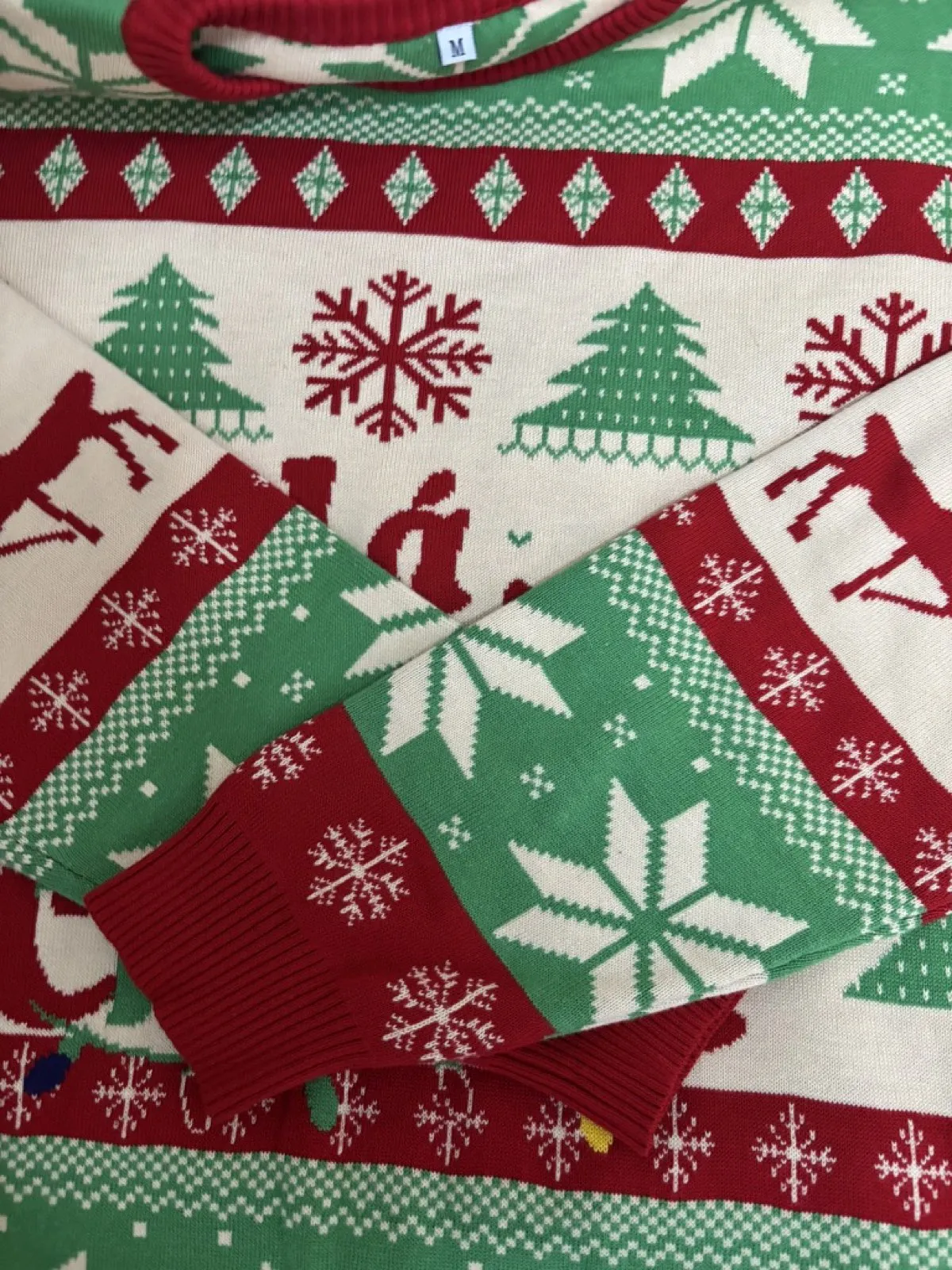
Choose jacquard for detailed, all-over patterns like snowflakes, Fair Isle, and reindeer scenes; choose intarsia for large, clean color blocks like a big reindeer, lettering, or a giant tree on the front. Both knit the color into the fabric — the difference is how: jacquard knits multiple yarns across the whole row, while intarsia knits each color block separately.
Here's how to tell them apart, what each costs, and which one fits your design.
The fundamental difference
Both jacquard and intarsia are knitted-in patterns — the color is part of the fabric, not printed on top (unlike print, which sits on the surface; see our print vs jacquard guide →).
- Jacquard — the knitting machine carries multiple yarn colors and alternates them across the row, so the pattern appears as a repeating structure across the whole garment. Great for detailed, all-over motifs with many colors.
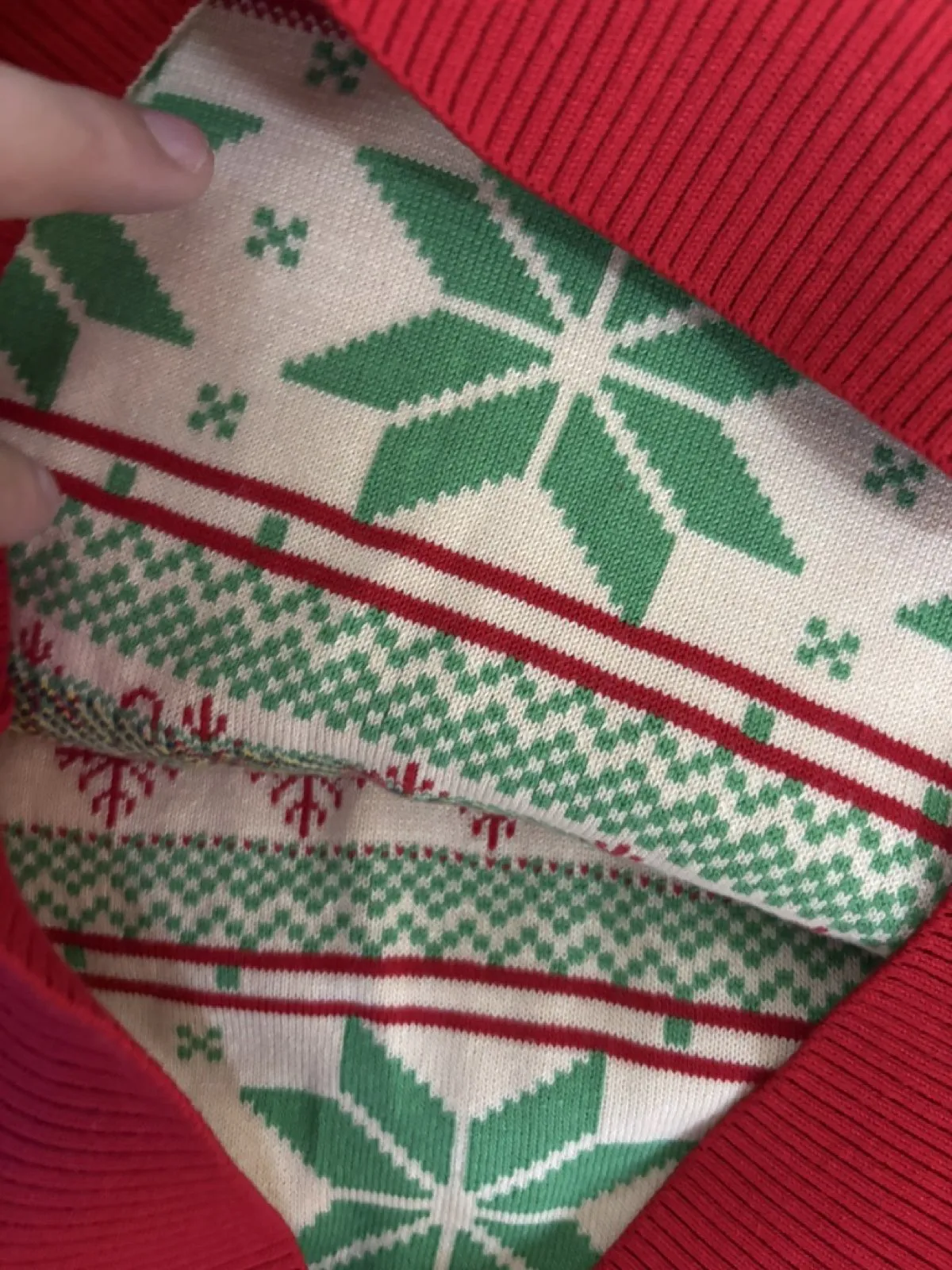
- Intarsia — each separate color area is knitted as its own block of yarn, joined at the edges. No yarn is carried behind unused areas, so you get large, flat, clean blocks of color — ideal for big graphic designs.
How they compare
| | Jacquard | Intarsia | |---|---|---| | Pattern style | Detailed, all-over, repeating motifs | Large, bold, block-color graphics | | Classic uses | Snowflakes, Fair Isle, reindeer fields, floral | Big reindeer, trees, letters, logos, panels | | Back of fabric | Pattern yarns carried across the back (floats) or locked into a double layer | Clean — color blocks meet edge to edge, no floats | | Thickness / feel | Can be thicker (esp. tubular jacquard) | Usually flatter, lighter | | Color count | Handles many colors in one row | Better with fewer, larger color areas | | Cost | Depends on back finish; mid to premium | Tends to be economical for simple, large designs | | Stretch | Varies by back type (sesame back is most elastic) | Good, but large blocks can be stiffer at seams |
Jacquard: for the "fair isle" look
If your Christmas design is a field of snowflakes, a reindeer scene, or a Fair Isle pattern, jacquard is the choice. It knits the motif densely across the body, so you get that rich, all-over texture people expect from a premium Christmas sweater.
Three jacquard back finishes to know (they change feel and price):
- Sesame back (bird-eye) — medium-thin, stretchy, breathable; the standard for everyday jacquard.
- Tubular (air-layer) back — thick, structured, clean solid back; the premium option that makes a sweater feel expensive.
- Net-back (mesh) — light, thin, airy; the most breathable and usually the lowest-cost jacquard.
Intarsia: for the big graphic look
If your design is one large motif — a giant reindeer across the chest, big letters, a bold tree — intarsia gives you clean, flat color blocks without the yarn "floats" you'd see on the back of a jacquard. It's a favorite for novelty and statement sweaters where one big graphic is the whole design.
Intarsia is also a good fit when you want a single-color-panel body (say, a red body with a cream motif) rather than an all-over pattern.
Which one should you choose?
Match the technique to your design — not the other way around:
- All-over snowflake or Fair Isle pattern → jacquard (tubular for premium, sesame for mid-range, net-back for light and budget).
- One large reindeer, tree, or lettering → intarsia.
- Several scattered motifs on a plain body → either works; jacquard holds detail better, intarsia keeps the body cleaner.
- Small logo or text → this is often better embroidered on top of a knitted body than knitted in.
Pro tip: high-value sweaters often combine techniques — a jacquard body for texture with intarsia or embroidery for the central motif, to get a multi-dimensional look. Ask your manufacturer what they recommend for your artwork before committing.
What it costs
Roughly, from lowest to highest: print < net-back jacquard < intarsia (simple) < sesame-back jacquard < intarsia (complex) < tubular jacquard. The exact number depends on yarn, color count, and quantity — and quantity moves the unit price more than the technique does.
FAQ
What's the difference between jacquard and intarsia? Jacquard knits multiple yarns across the whole row, creating detailed all-over patterns with floats or a double layer on the back. Intarsia knits each color block separately, giving large, clean, flat color areas with no floats.
Which is better for a Christmas sweater? It depends on the design: jacquard for detailed all-over patterns (snowflakes, Fair Isle, reindeer scenes), intarsia for large graphic blocks (a big reindeer, tree, or letters).
Is intarsia more expensive than jacquard? Not necessarily. Simple intarsia can be economical, while complex intarsia and premium jacquard (tubular back) sit at the higher end. The design and yarn move the price more than the technique name.
Does intarsia have floats on the back? No — that's one of its advantages. Color blocks meet edge to edge, so the back is clean. Jacquard carries unused yarns across the back (or locks them into an air layer).
Can I combine jacquard and intarsia in one sweater? Yes. Premium custom sweaters often combine a jacquard body with intarsia or embroidery for the central motif. Tell your manufacturer what you want and they'll recommend the right mix.
Not sure which your design needs?
Send us your artwork (or a sketch) and we'll recommend a technique — plus the yarn and back finish that hit your price point. Explore our custom Christmas sweater capabilities →, or request a quote and we'll take it from there.
Related: Print vs Jacquard Knitwear: The B2B Buyer's Guide · How to Choose the Right Christmas Sweater Knitting Technique