How to Tell if a Sweater Factory Can Do the Craft You Need (13-Color Jacquard, Textured Knit, Embroidery, Rhinestones)
Most factories quote the same four words — jacquard, intarsia, embroidery, rhinestones. The difference is whether they can actually execute them well. Here is how to check craft capability before you commit a custom sweater order, and why the factories that can do complex work are rarer than the ones that say they can.
Two factories with the same machines can still produce very different sweaters — because complex knit and decoration live in process skill, not machine count. When you order a sweater with detailed artwork, deep texture, or trim, this is what actually separates the ones who can deliver from the ones who over-promise.
1. Jacquard: ask how many colors the machine actually knits
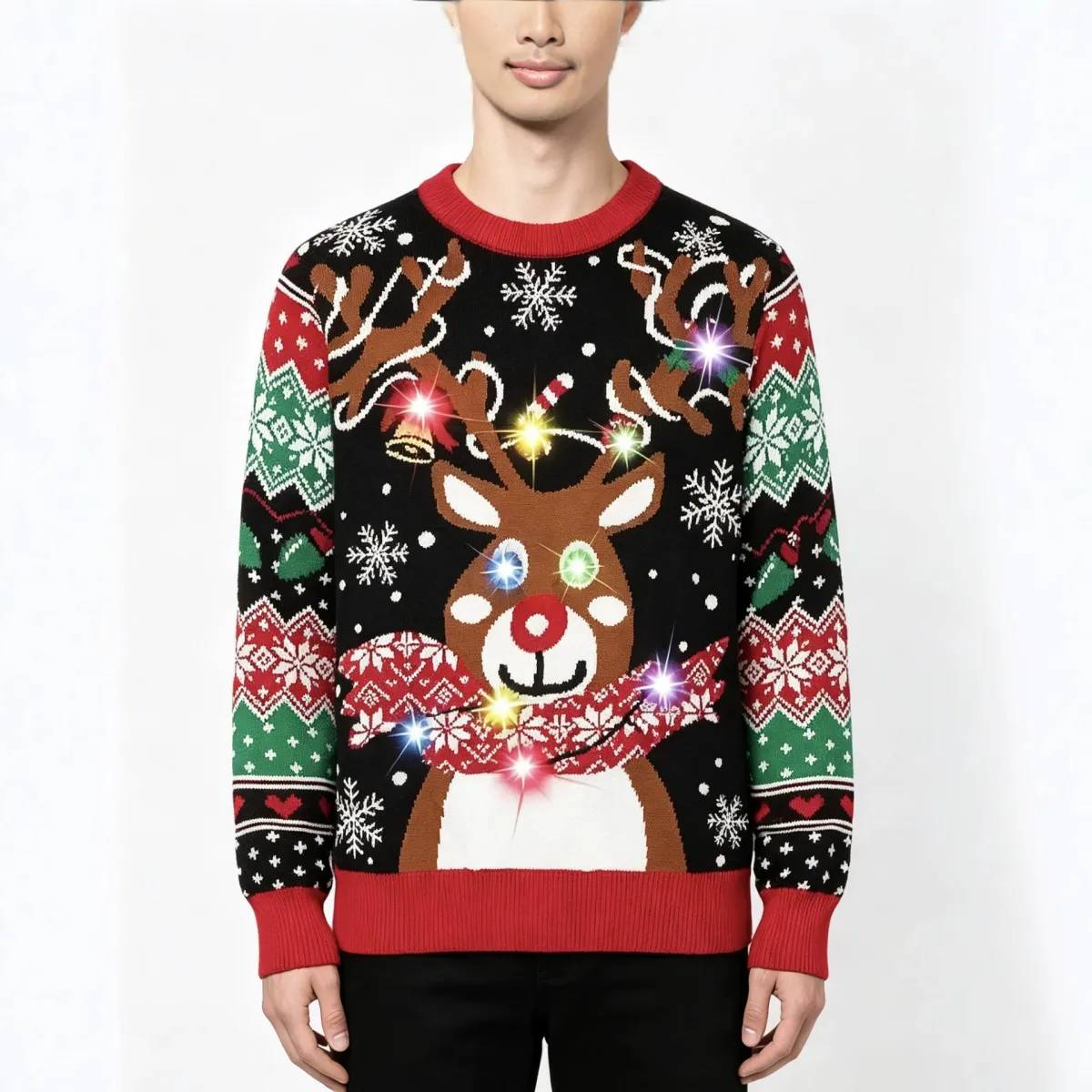
Jacquard is colorwork knit into the fabric. The hard ceiling is color count — most standard looms/factories top out around 6 colors per row. A sweater with a busy reindeer, Santa, or brand motif needs more. Ask directly: "How many jacquard colors can you run?"
- Industry typical: 4–6 colors
- Capable mills: 8–10
- Rare: 12–13 colors with clean color separation, no floats tangling the back
A 13-color jacquard is not a small step from 6 — it changes the pattern chart, the yarn carrier count, and the finishing. Factories that say "yes, of course" and can't show you a real 13-color sample are the ones to walk away from.
2. Textured knit (bitter-gourd / relief stitch): check for clean, reversible texture
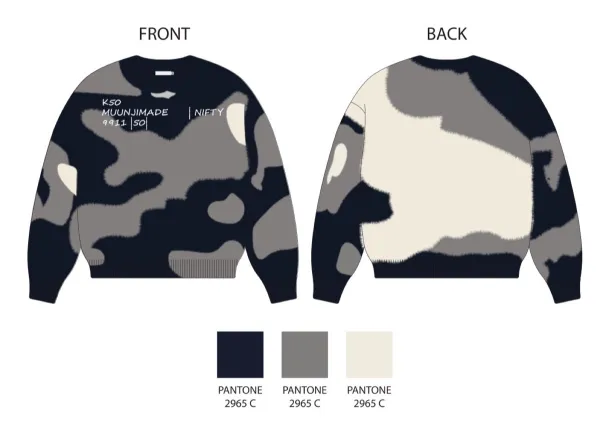
Textured sweaters like the bitter-melon (relief) stitch look simple but are hard to make clean on both sides. Many factories produce it with a messy reverse or uneven relief. A capable mill gets the raised texture crisp and the fabric balanced so it drapes, breathes, and holds its shape after washing.
Ask to see the reverse side and a washed sample, not just the stock photo.
3. Embroidery: the test is density + edge + stability on knit
Any shop can stitch a logo. On knit fabric (which stretches), good embroidery is hard: the thread must sit at the right density, the edges must not distort, and the backing must keep it from puckering after wear and washing. Check:
- Can they do high-density fills and fine detail (not just block letters)?
- Do samples survive repeated washing without pull or pucker?
- Do they adjust backing/tension for stretchy knit, rather than treating it like woven?
4. Rhinestones / hot-fix stones: the real test is "do they fall off"
Rhinestones are easy to apply and hard to keep on. Cheap hot-fix stones pop off after a couple of washes or a single party. A factory that applies them properly controls the stone quality, glue system, and application heat/pressure so the stones stay put.
One clarification worth knowing: hot-fix rhinestones belong on cut-and-sew garments — t-shirts, hoodies, jackets and shirts — rather than on knitwear. The stretch and texture of a knitted sweater make adhesion unreliable, so treat rhinestones as a garment-decoration question, not a sweater question.
Ask: "Can I see a washed sample with rhinestones still intact?" If they hesitate, that's your answer.
5. Why this matters: the real trade-off in custom sweaters
In custom knitwear there is a constant tension: low price + low MOQ on one side, craft + quality on the other. Most suppliers force you to pick one — pay more / order more to get real craft, or order cheap and accept the limits.
A factory that actually controls its own floor can break that trade-off: you get the complex craft and a low MOQ and a price that beats the market, because there's no middle layer marking up the work. That is the difference between a quote and a partner.
Checklist before you commit
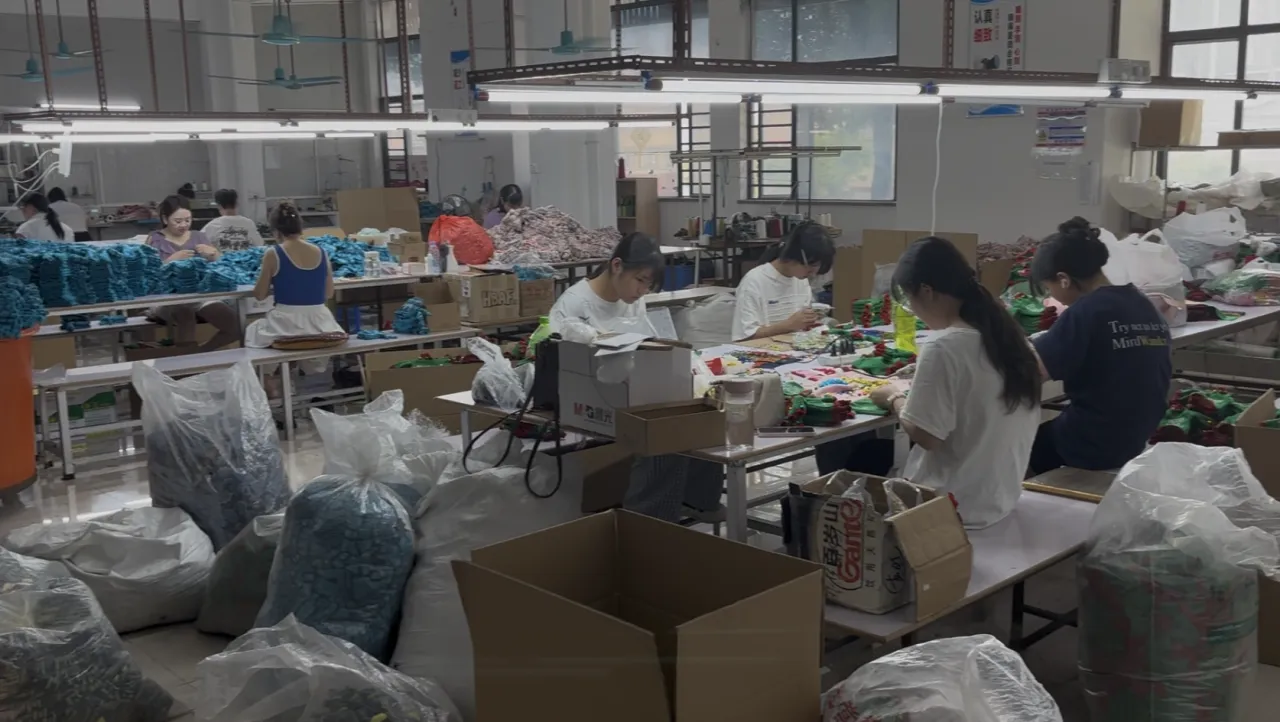
- [ ] Real factory (video of the floor, not a catalog)
- [ ] Confirmed jacquard color count (want 8+, ideally 12–13)
- [ ] Textured-knit sample, reverse + washed
- [ ] High-density embroidery sample, washed
- [ ] Rhinestone sample, washed — stones still on
- [ ] Low MOQ + sampling speed + price transparency in writing
Related: How to Choose a Christmas Sweater Manufacturer · Custom Christmas Sweater Cost: A B2B Pricing Guide · Our custom knitwear capabilities
FAQ
What does "13-color jacquard" mean? It means the machine knits up to 13 colors in the pattern — far more detail and color separation than the 4–6 colors most mills cap at.
Can a factory do both knitwear and decoration (embroidery/rhinestones)? Some can handle the full chain; the skill is doing both well and keeping quality consistent. Ask for wash-test samples.
Do you need a big order for complex craft? Not if the factory controls its own production. Complex craft at low MOQ is exactly what a capable direct factory can offer.
Need a factory that can actually do this craft, at low MOQ? → Request a Quote