Custom Jacquard Socks: A Manufacturing Case Study
Custom jacquard socks are knitted, not printed — the pattern is part of the fabric. And that's exactly why a complex design is hard to get right. Here's a real project for a US music-themed brand where we ran three sample rounds to nail a 3D character and a piano keyboard — and what it teaches anyone ordering custom socks.
The project: music-themed socks + tees for a US brand
A US arts organization needed branded merchandise for an event with a hard delivery deadline (September 15, door-to-door, DDP). The order combined:
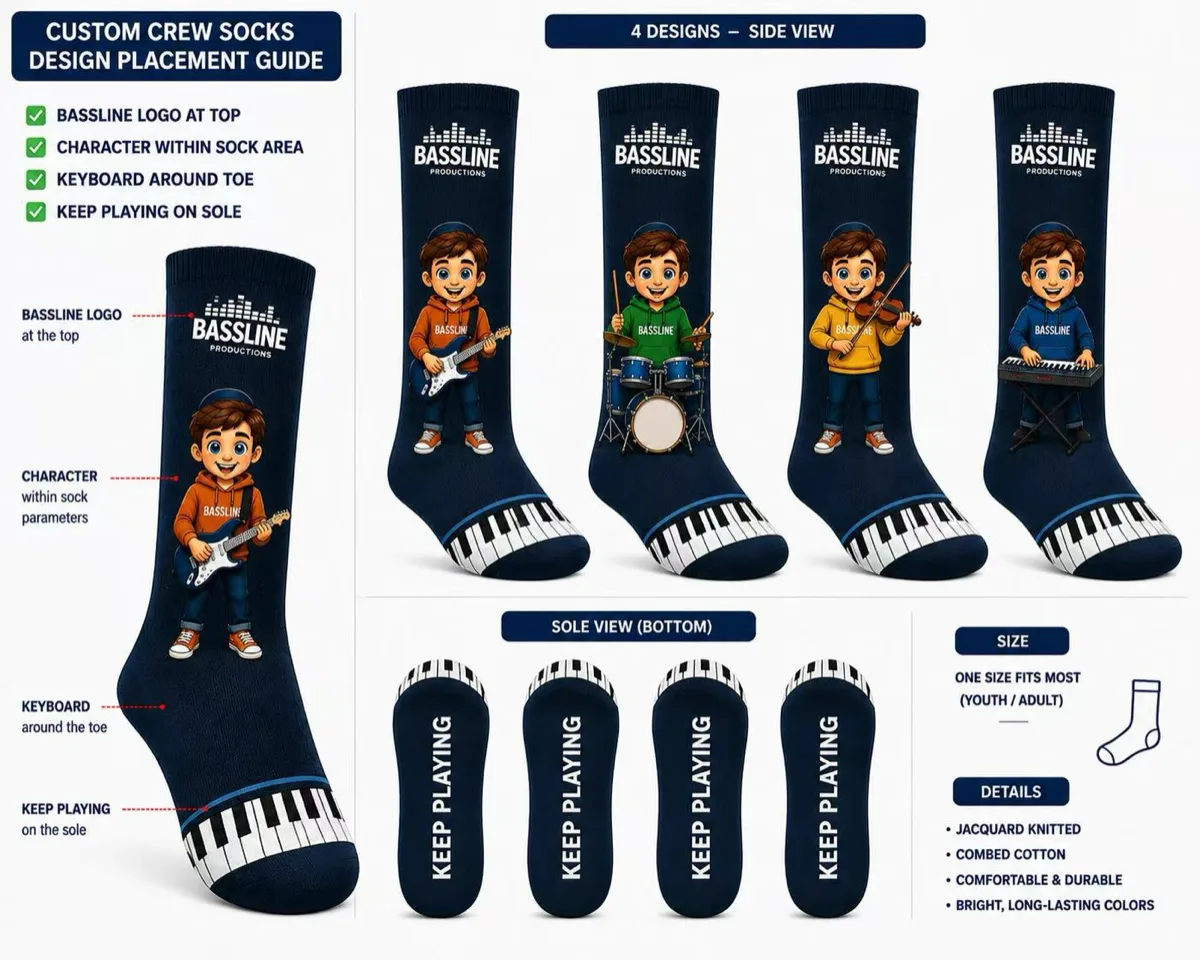
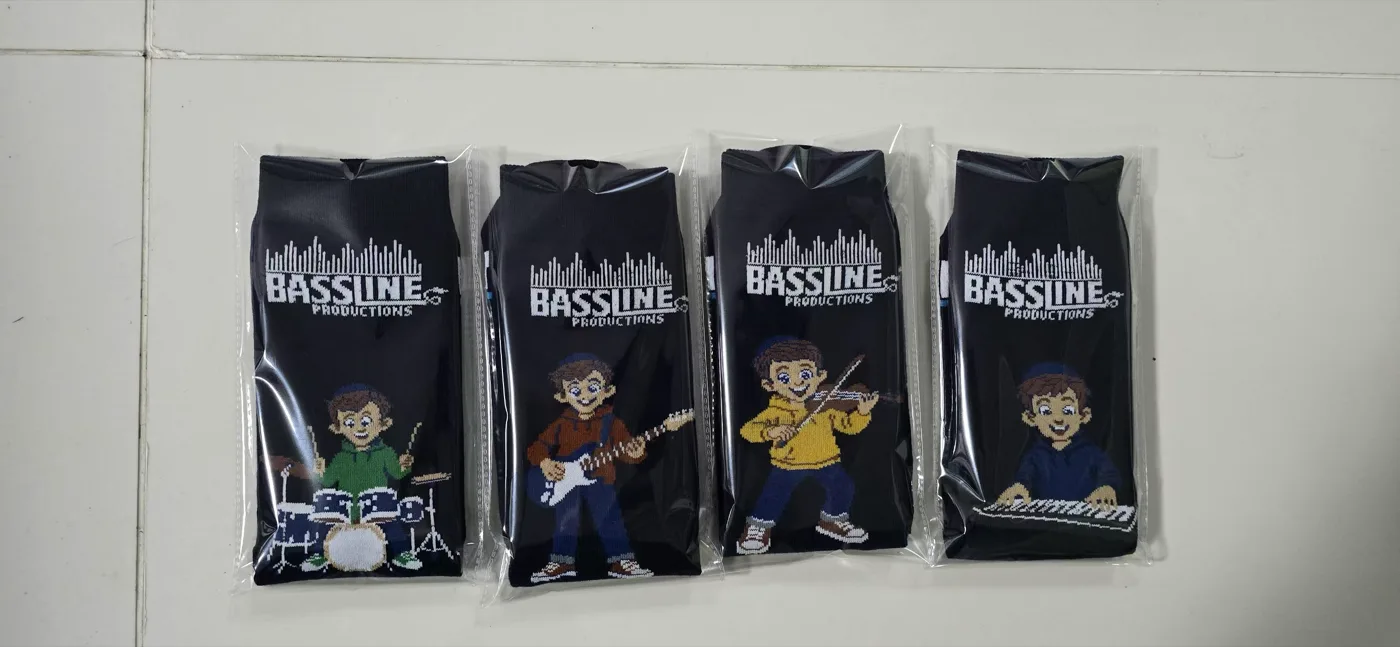
- Custom jacquard socks in four music designs — Keyboard, Guitar, Violin, and Drums — built around the brand's 3D character.
- Matching custom tees, coordinated so the whole set felt like one identity.
The socks had to do two things most socks never have to: reproduce a 3D cartoon character in knit, and get a piano keyboard that a musician would recognize as correct in one glance. Both are much harder than they sound.
Why jacquard socks are the premium choice
With jacquard, the design is knitted into the fabric — it can't peel, crack, or wash off the way a printed sock can. For a brand that cares how its merch feels and lasts, jacquard is the clear step up from printing. (See our custom jacquard socks →)
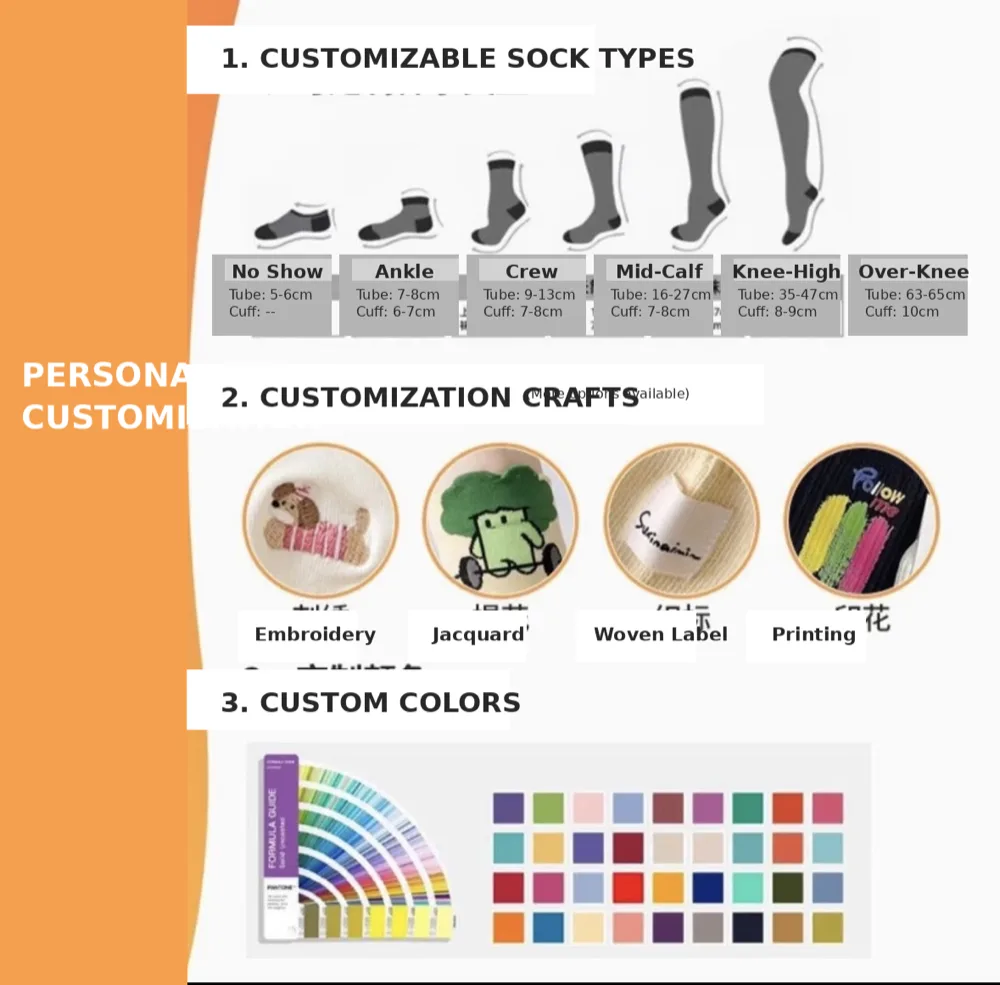
But the same feature that makes jacquard premium is what makes it demanding: every color, line, and tiny detail has to be engineered into the knit pattern itself. Two details broke the first samples.
The hard part: two details most suppliers get wrong
1. Reproducing a 3D character in knit
The brand's mascot is a high-quality 3D cartoon guitarist. Turning a shaded, dimensional 3D render into a clean, readable knit pattern — without losing the character's identity — is a real technical job. It's not "paste the image and hope." It takes pattern separation, color reduction, and knowing exactly how much detail 12-gauge knit can hold.
2. A piano keyboard that obeys piano logic
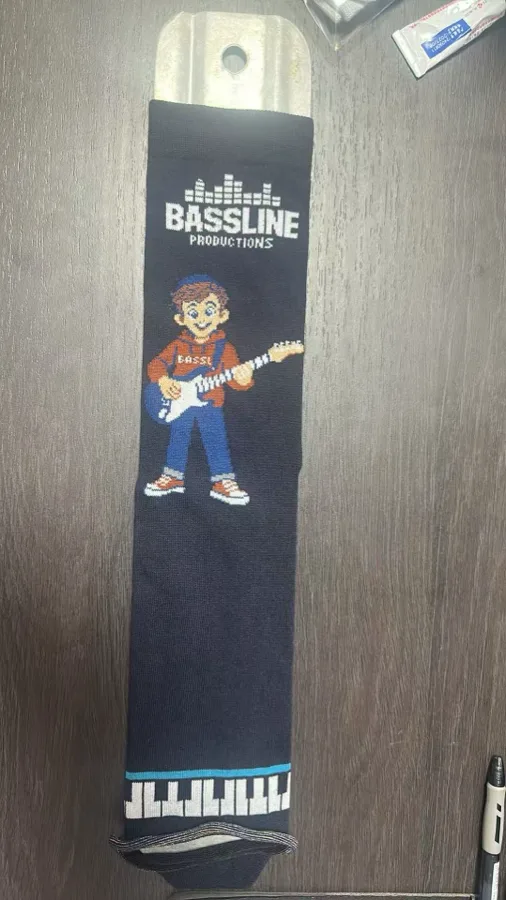
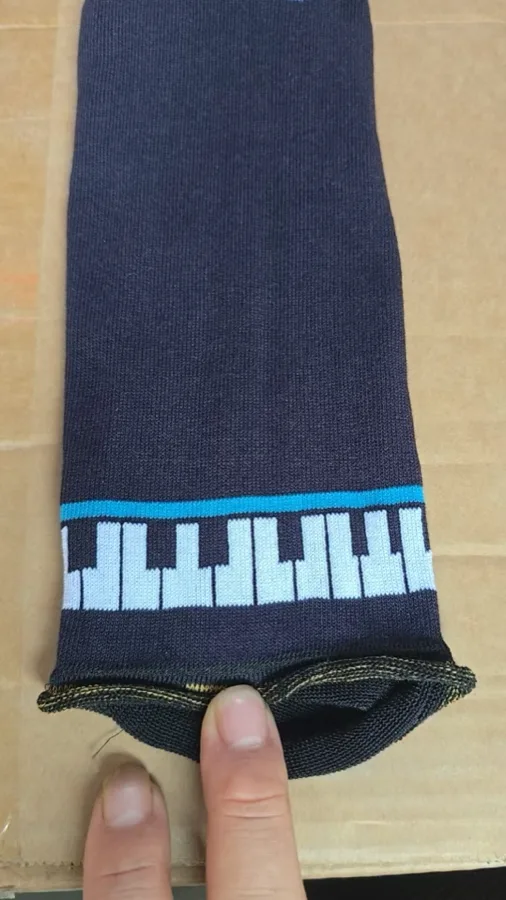
A real piano keyboard has a strict physical rule: black keys are grouped in 2s and 3s, alternating across the white keys. On the first sample, the black keys were evenly spaced — it read "kind of like a keyboard," but any musician would spot it instantly. For a music brand, that's a dealbreaker.

Three sample rounds (with photos)
Round 1 — the wake-up call
The first sample surfaced three issues:
- Wrong logo version used in the knit.
- Black keys evenly spaced — not a real piano keyboard.
- Hoodie text too small to read at that scale.
Our call: drop the hoodie text (the knit simply couldn't hold it at that size), correct the logo, and fix the keyboard logic.
Round 2 — closer, but a classic sourcing mistake
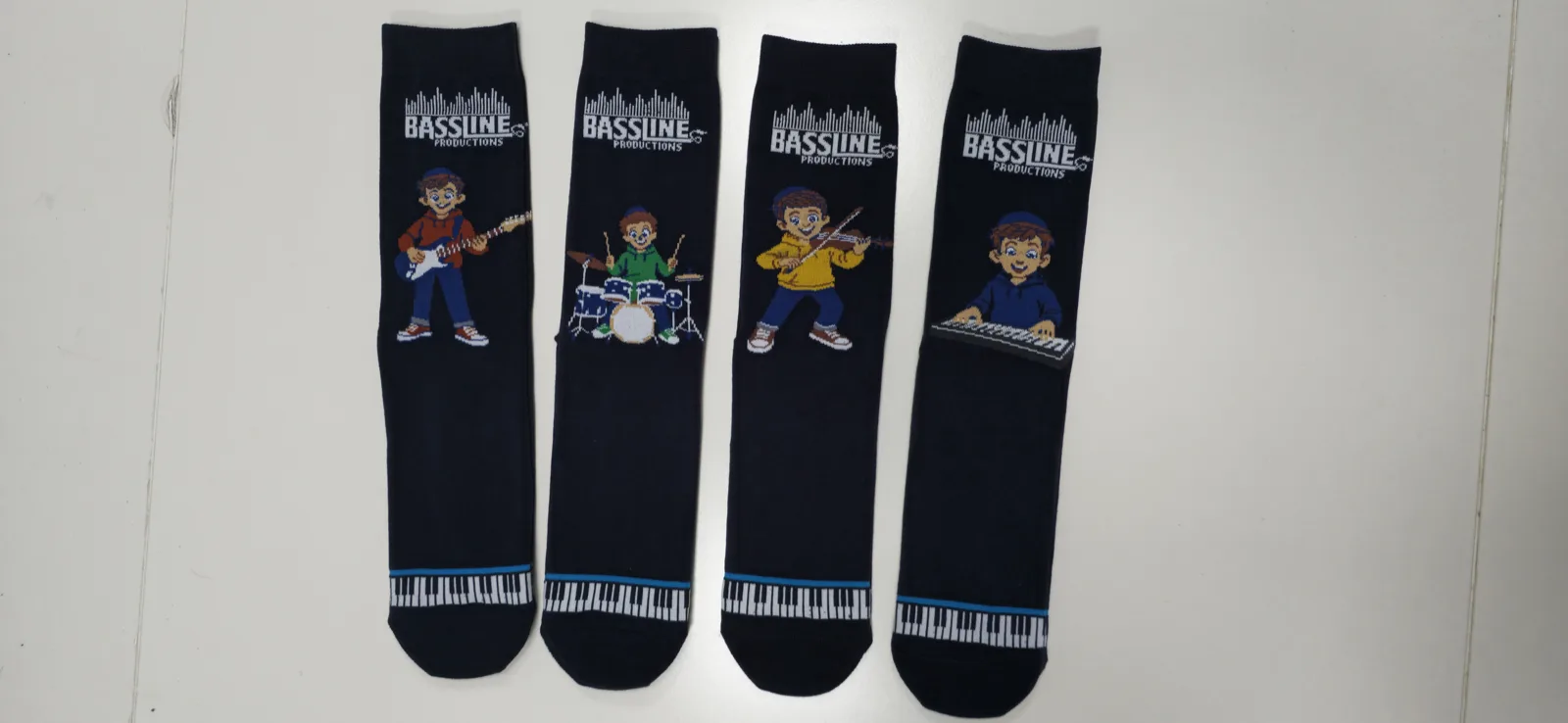
Progress: the logo was now correct. But two problems remained:
- The supplier had pulled the placeholder figure from the layout guide instead of the 3D original — a classic "asset isolation" mistake.
- The guitar colors drifted from the 3D reference.
- The black keys were still evenly spaced.
This is the round that taught us to be explicit with any supplier: layout references are for position only — never for artwork.
Round 3 — the approved sample
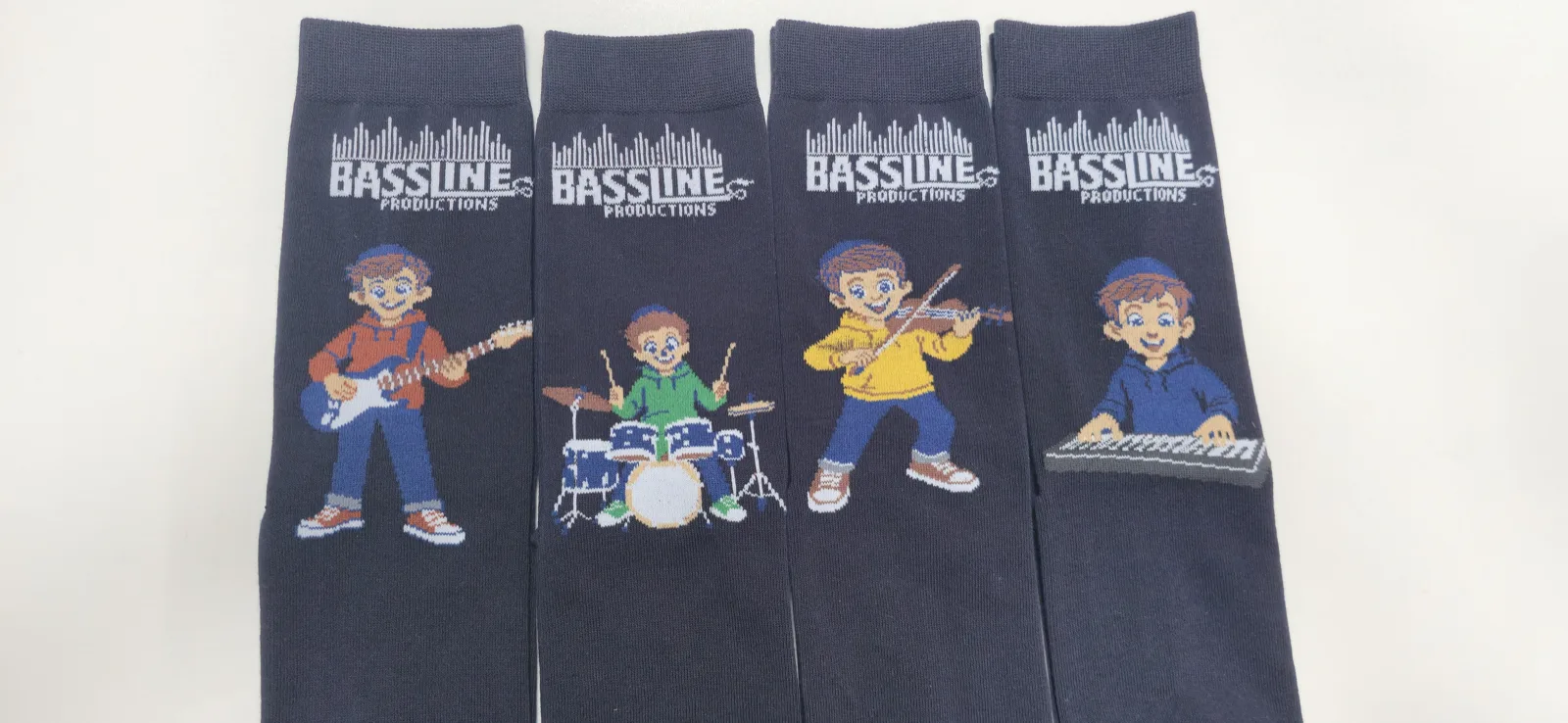
The third round finally brought the keyboard logic right, the 3D character clean, and the colors matched to the reference. This is the version that went into production.
What this project teaches buyers
Three lessons from running a tricky jacquard sock order:
- Sample rounds aren't a failure — they're how a design becomes manufacturable. A complex jacquard design almost never survives round one. Budget the time for two to three rounds.
- Explicitly separate "position" from "artwork." Tell your supplier: layout references are for placement only, never for the final art.
- Functional details matter to your customer. A musician checking your piano-keyboard sock will notice if the keys are wrong. Correct the small stuff before it ships.
Ready to make custom socks?
Send us your artwork — or just an idea — and we'll tell you what's achievable in jacquard, what the sample process looks like, and what it costs. Request a quote →